A new bioengineered graft platform merges mechanical resilience with regenerative biology, showing strong preclinical performance across multiple animal models and offering a potential solution to the long-standing shortage of viable vascular grafts.
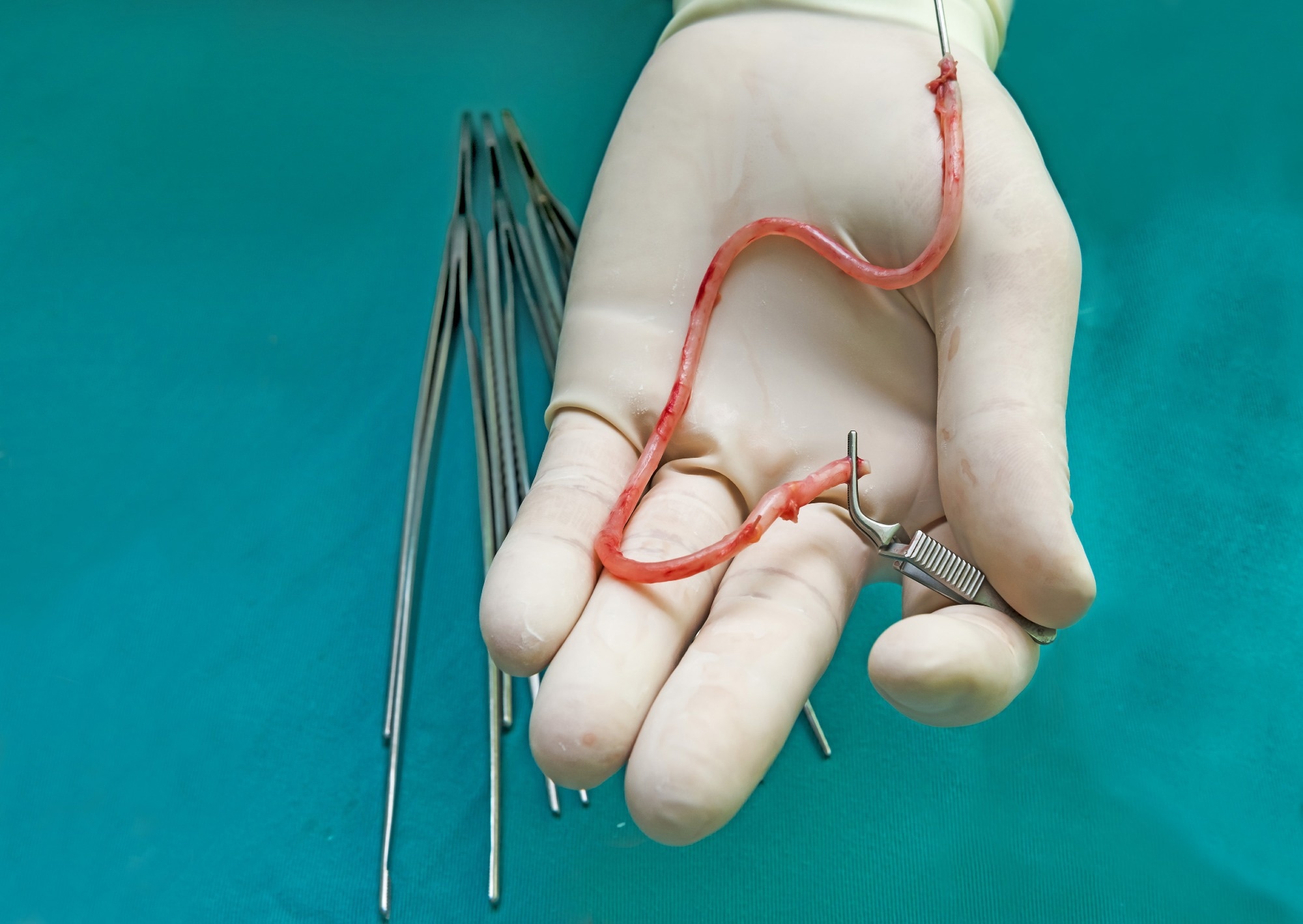 Study: Reinforced biotubes as readily available and regenerative vascular grafts. Image credit: pirke/Shutterstock.com
A new study published in Nature Communications introduces a solution to a long-standing challenge in vascular surgery: the shortage of suitable grafts. Researchers have developed decellularized polymer-skeleton–reinforced biotubes (dPB) engineered via a combined biofabrication and decellularization approach.
These grafts demonstrate strong mechanical performance, resistance to kinking and repeated puncture, and retention of key mechanical properties during storage (up to 12 months at 4 °C). Preclinical models show that dPB supports rapid tissue regeneration and maintains high patency, highlighting its potential as a pro-regenerative alternative for vascular repair applications.
Rising Demand Exposes Critical Shortage Of Vascular Grafts
The growing burden of cardiovascular disease and the need for hemodialysis access procedures have increased demand for reliable vascular grafts. While autologous vessels remain the gold standard, constraints in availability and associated complications have driven the search for alternatives. However, clinically used synthetic grafts are limited by poor patency, high rates of thrombosis, infection, and calcification, particularly in small-diameter applications.
Although extracellular matrix (ECM)–based and tissue-engineered grafts offer regenerative potential, challenges such as inadequate recellularization, complex manufacturing, and limited availability persist. These limitations underscore the need for accessible grafts that combine mechanical strength with pro-regenerative capacity.
Hybrid Biofabrication And Decellularization Strategy Developed
In this study, researchers designed a multi-step strategy integrating structural engineering, in vivo biofabrication, and biochemical processing to develop dPB as a vascular graft.
The team first fabricated polycaprolactone (PCL) fiber skeletons via melt spinning, optimizing fiber diameter and winding angle to achieve the mechanical properties required for vascular implantation. After sterilization, they implanted these scaffolds subcutaneously in rats and sheep for 30 days, leveraging the foreign body response to generate tissue-encased biotubes. The harvested constructs were then decellularized using detergent-based protocols to remove cellular components while preserving a porous, bioactive ECM. Heparin modification was applied to selected grafts to enhance anticoagulant properties for small-diameter applications.
Researchers performed extensive structural and functional characterization. Scanning electron microscopy and histological staining assessed microstructure and matrix composition, while mechanical testing measured tensile strength, burst pressure, elasticity, and suture retention. Hemocompatibility was evaluated through coagulation assays, platelet adhesion and activation, complement activation, and hemolysis testing. Proteomic analyses further identified key proteins associated with immunomodulation and tissue regeneration.
To evaluate in vivo performance, the team implanted dPB across multiple models. Rabbit carotid artery replacement models assessed early regeneration and patency, while rat abdominal artery models examined macrophage-mediated responses. Large-animal models, including canine carotid replacement, porcine coronary artery bypass grafting, and canine arteriovenous grafting, were used to evaluate long-term patency, mechanical stability, and functional integration under clinically relevant conditions; however, some large-animal small-diameter studies did not include direct clinical comparator grafts due to the lack of suitable alternatives.
Graft performance was monitored using color Doppler ultrasound and angiography, while explanted tissues underwent histological, immunofluorescence, and functional analyses. Together, this comprehensive methodology enabled rigorous assessment of dPB as a scalable, “off-the-shelf” regenerative vascular graft.
Regenerative Grafts Show Strong Patency Across Models
The engineered dPB grafts demonstrated robust regenerative performance and safety across preclinical animal models. Researchers observed rapid cellularization, enhanced vascularization, and sustained patency, with no evidence of dilatation, calcification, or intimal hyperplasia in successful large-animal implants, and generally favorable outcomes across studies, although early thrombosis was observed in non-heparinized small-diameter grafts, and a single acute thrombotic event occurred in a porcine coronary bypass model.
Compared with decellularized native arteries, dPB achieved more complete endothelial coverage and smooth muscle cell regeneration, supported by a porous ECM that enabled efficient cell infiltration and tissue remodeling. Imaging and histological analyses further confirmed stable luminal diameter and minimal stenosis following implantation.
Mechanistically, dPB was shown to promote macrophage polarization toward pro-regenerative M2 phenotypes, as demonstrated by gene expression and proteomic profiling. This immunomodulatory response was associated with reduced pro-inflammatory signaling and enhanced healing, although the precise causal pathways underlying regeneration remain to be fully established.
Structurally, the grafts exhibited higher tensile strength, burst pressure, and suture retention than controls, while maintaining flexibility and resistance to kinking and repeated puncture, key requirements for vascular implantation and hemodialysis access.
In large animal studies, dPB maintained long-term patency and functional integration. Canine and porcine models showed well-organized endothelial and smooth muscle layers, along with native-like vasoreactivity to physiological stimuli. Small-diameter dPB achieved a primary patency rate of 85.7 %, while 6-mm grafts used for hemodialysis access maintained 100 % patency over 24 weeks, outperforming conventional ePTFE grafts in this arteriovenous graft model. These grafts also enabled faster hemostasis and showed superior resistance to puncture-induced damage.
Importantly, dPB exhibited low immunogenicity, with no detectable adverse immune responses in the preclinical models, minimal residual antigenicity, and stable mechanical properties during storage. However, heparin-modified grafts showed a gradual loss of anticoagulant activity during prolonged liquid storage due to heparin release, while simultaneously undergoing gradual polymer degradation and forming native-like vascular tissue with physiological function. Collectively, these findings position dPB as a durable, bioactive, and clinically promising “off-the-shelf” vascular graft.
Reinforced Biotubes Offer Scalable Off-The-Shelf Graft Solution
The study demonstrates the development of decellularized polymer skeleton–reinforced biotubes as regenerative vascular grafts with strong mechanical performance and pro-healing bioactivity. The findings suggest that dPB can support functional tissue regeneration and may serve as a viable alternative to limited autologous vessels and complication-prone synthetic grafts.
By integrating biomimetic design with structural support, the approach offers a scalable, “off-the-shelf” solution for vascular repair. Future research should focus on long-term remodeling after complete polymer degradation, improved preservation strategies, and clinical validation, while also exploring broader applications in tissue engineering and reconstructive medicine as potential future directions.
Download your PDF copy by clicking here.
Journal Reference
Cheng, Q., Zhi, D., Midgley, A.C. et al. (2026). Reinforced biotubes as readily available and regenerative vascular grafts. Nature Communications. DOI: 10.1038/s41467-026-70799-0. https://www.nature.com/articles/s41467-026-70799-0
 Advanced RNA Sequencing Separates Rare Regenerative Cells From Mature Tissue