A new generation of synthetic antibiotics wiped out dormant MRSA cells, suppressed bacterial virulence, and avoided detectable resistance in lab studies, offering a promising new weapon against hard-to-treat superbug infections.
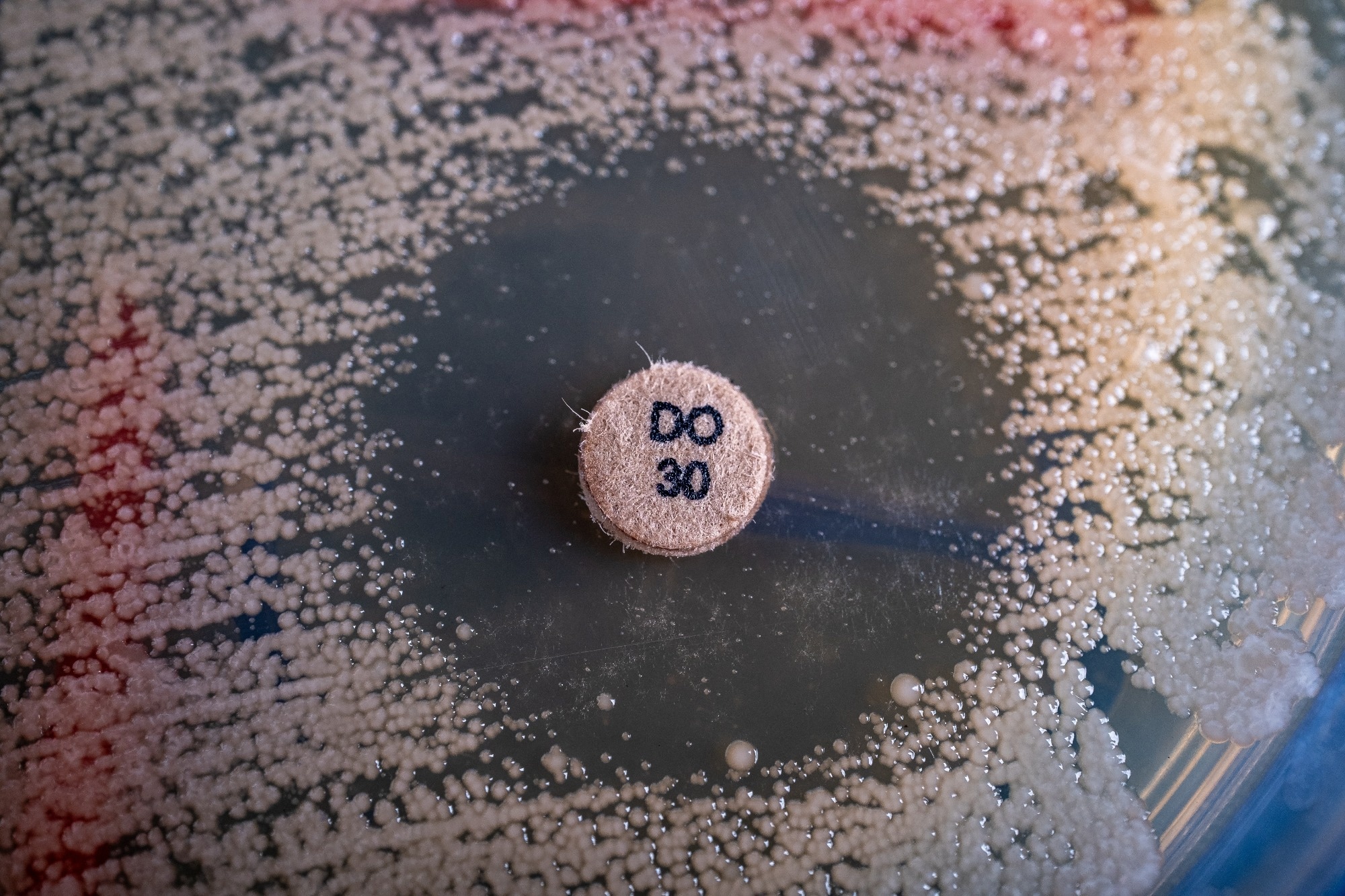 Study: Tunable TriPcides suppress virulence factor secretion during Staphylococcus aureus infection and kill dormant cells. Image credit: Mohammed_Al_Ali/Shutterstock.com
In a recent study published in Science Advances, researchers developed TriPcides, a new type of three-dimensional 2-pyridones to combat antimicrobial resistance (AMR). These compounds killed methicillin-resistant Staphylococcus aureus (MRSA) cells, including dormant persister cells in laboratory models, a major cause of difficult-to-treat bacterial infections.
The findings highlight the potential of TriPcides to expand the treatment landscape for MRSA infections. However, further investigations are required to validate the findings and determine their clinical potential.
TriPcides Target Drug-Resistant MRSA And Persister Cells
Antimicrobial resistance is becoming increasingly common among bacterial pathogens. Such organisms are difficult to treat with conventional antimicrobials. AMR has led to millions of deaths worldwide and continues to cause substantial mortality globally. Scientists, therefore, need to develop more effective treatment strategies to address this rising public health concern worldwide. Novel treatments must also, ideally, be more cost-effective and have better safety profiles to support broader use.
Researchers previously developed bicyclic GmPcides, synthetic antibiotics that were effective against several bacterial pathogens. However, a few organisms quickly developed resistance through genetic mutations, increasing their tolerance and making them harder to kill.
Engineered Tunable Tricyclic Antibiotic Compounds
In the present study, researchers expanded on earlier bicyclic GmPcides by developing novel tricyclic compounds called TriPcides. They used a structurally flexible thiazolo-2-pyridone scaffold that can be easily modified to adjust its properties and broaden its utility without requiring expensive photocatalysts. The team used visible light to drive a photocatalyst-free, regio- and diastereoselective [2+2] cycloaddition reaction between thiazolo-2-pyridones and styrenes. They performed substitution experiments by incorporating several aryls or heteroaryls to improve potency.
The team calculated the minimum inhibitory concentration (MIC) and minimum bactericidal concentration (MBC) to assess antibacterial activity against MRSA. They also performed in vitro hemolysis analysis and assessed cytotoxicity in HeLa and HepG2 cells. Continuous exposure assays (CEA) were used to investigate whether TriPcides were effective against mutant strains resistant to the previously developed bicyclic GmPcide compounds.
The team tested efficacy using 121 methicillin-susceptible S. aureus (MSSA) and MRSA isolates along with 109 enterococcal strains. They also evaluated treatment effects in persister or dormant bacterial cells. The researchers exposed bacterial pathogens to gradually increasing concentrations of the drug to investigate whether the strains would develop resistance mechanisms. They analyzed growth curves and colony-forming unit (CFU) measurements on treated cells to improve understanding of the bactericidal mechanisms.
The researchers also conducted fluorescence membrane integrity assays and membrane disruption assays to explore effects on bacterial cell membranes. Transposon sequencing (Tn-seq) experiments provided genetic information underlying the biological mechanisms of action. The team performed mass spectrometry–based analysis to assess effects on the secretion of virulence factors. They also performed checkerboard assays to compare their effects with those of commonly used anti-MRSA antibiotics, such as daptomycin and linezolid. The team additionally investigated the effects of subcutaneous TriPcide injections (administered daily for five days) in murine models of skin and soft tissue infections (SSTIs).
TriPcides Kill Dormant MRSA Without Detectable Resistance
TriPcides killed MRSA strains resistant to ‘last-resort’ antibiotics such as daptomycin. The team could not detect natural resistance among over 200 clinical bacterial isolates tested. In fact, even at low concentrations (MIC90: 3.5-7.0 μM), TriPcide SS1045B could inhibit bacterial growth. These included Streptococcus pneumoniae, Streptococcus pyogenes, and Bacillus subtilis.
Repeated exposure to gradually higher concentrations of the drug also failed to generate resistant MRSA strains during laboratory passaging experiments. The treatment effectively reduced the secretion of virulence factors, likely making the bacteria less capable of damaging host tissues or causing severe disease.
TriPcides were also effective against bacterial dormant cells. Tn-seq experiments showed that even low, non-lethal doses of TriPcides affected pathways associated with ATP production and reactive oxygen species (ROS) stress responses, while follow-up experiments showed increased ATP and ROS levels in treated cells.
Elevated ATP levels indicated increased cellular activity, whereas elevated ROS levels damaged cellular components, reducing membrane integrity. Together, these effects may help sensitize dormant cells to treatment. This is especially relevant because dormant bacterial cells are often difficult to kill due to low metabolic activity, rendering many antibiotics ineffective against them.
Importantly, the newer TriPcides could overcome efflux-based mechanisms that enabled microbes to develop resistance to bicyclic GmPcides. This makes them potentially valuable for treating persistent or drug-resistant infections.
In the mouse SSTI model, TriPcides reduced ulcer size by approximately 40% and shortened healing time. Even though reductions in total bacterial counts were modest, these compounds produced ulcer-healing benefits comparable to azithromycin despite limited bacterial clearance and limited disease severity, providing important clinical benefits. However, TriPcides alone did not significantly reduce bacterial burden in the infected tissue. Notably, combining TriPcides with azithromycin in the mouse model resulted in greater reductions in ulcer size than either treatment alone.
TriPcides Show Promise Against Persistent Superbug Infections
The study findings showed that TriPcides were effective against multidrug-resistant bacteria and dormant persister cells. Bacterial strains treated with these compounds showed no detectable resistance in laboratory testing and a reduced ability to cause severe disease. The findings suggest that TriPcides may be a promising new, potentially cost-effective, and scalable approach to treat difficult-to-treat bacterial infections, especially those caused by MRSA.
Future studies should identify dosing strategies to enhance TriPcides effectiveness in the body and explore combinations with existing antibiotics to improve bacterial killing and support wound healing.
Download your PDF copy by clicking here.
-590_18da4e909d704b5fa71b7dd9ad43e610-80x70.jpg) Viral Metagenomics Uncovers Distinct Replication Machinery in Plateau Wetland Soils
Viral Metagenomics Uncovers Distinct Replication Machinery in Plateau Wetland Soils