A global analysis reveals that while warming temperatures push breeding and migration earlier, these shifts alone cannot explain why some vertebrate populations persist while others decline.
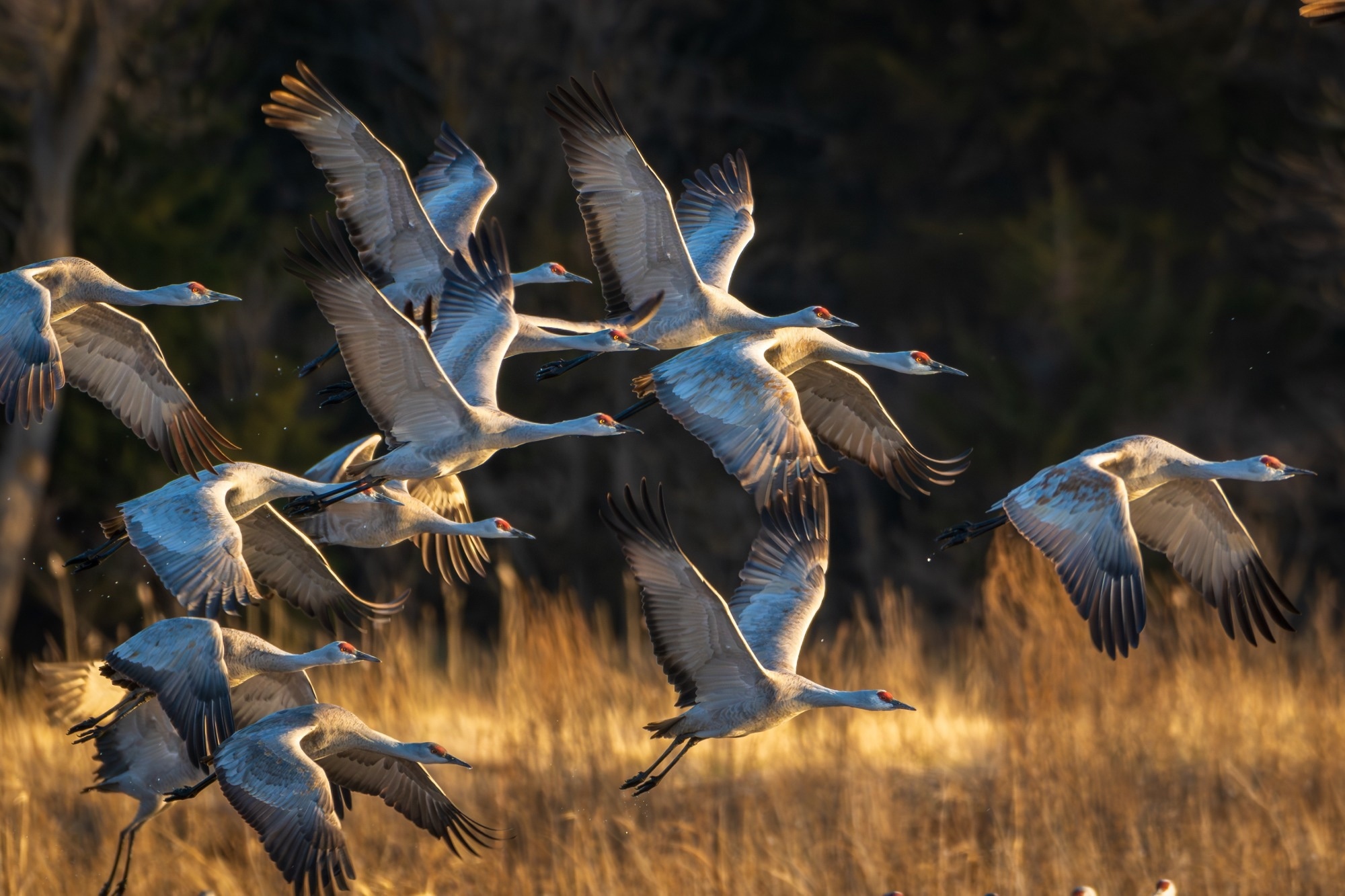 Image credit: David Grimes/Shutterstock.com
Climate-driven shifts in biological timing are threatening vertebrate populations worldwide, with major implications for biodiversity and conservation planning. A recent Nature Communications study shows that rising temperatures often trigger earlier biological events, but that trait-based responses alone are poor predictors of population outcomes.
Why Climate Responses Differ Across Species And Regions
While earlier biological timing is sometimes linked to neutral or even positive temperature-related effects on population growth, these shifts do not reliably lead to population increases and differ widely among species and locations. Previous research also suggests that advancing timing can heighten exposure to extreme weather, such as late cold spells. Together, these findings underscore the highly variable nature of species responses and the critical role of local demographic and ecological context in shaping climate-related impacts.
Climate change is reshaping traits that influence species survival. While the timing of key events such as reproduction and migration often shifts earlier in warmer-than-average years, physical traits like body size and shape show little consistent response to climate variation in this dataset. Although these trait changes may reflect short-term adjustment through phenotypic plasticity, they do not reliably predict whether populations will grow or persist over time.
Despite widespread climate-related shifts in phenology, climate change has driven widespread population declines, and it remains unclear whether trait changes consistently translate into population growth, a key factor for predicting long-term biodiversity outcomes.
Tracking Climate-Driven Trait Changes Across Vertebrates
In the present study, researchers quantified the extent to which climate-driven changes in phenotypic traits influence population growth rates across wild vertebrate populations worldwide. The analysis included 213 time series covering phenotypic traits and population sizes from 73 wild vertebrate species, including birds, mammals, reptiles, and fish. Bird populations accounted for the majority of available data, and time series data were paired with site-specific climate information for analysis.
The researchers compiled the dataset by combining the global database on phenotypic responses to climate and selection data (PRCS) with a systematic review. The review was conducted in April 2019 using the Web of Science. Eligible studies reported annual mean morphological or phenological trait values along with corresponding estimates of population size. Each time series covered at least nine years. Only studies explicitly linking quantitative trait variation to climatic factors were included.
The team grouped traits into phenology (timing of events such as breeding or migration) and morphology (body mass and structural size). They focused primarily on temperature as the main climate variable, with precipitation playing a more limited and inconsistent role. To avoid confounding short-term effects with long-term trends, they used year-detrended climate values, which remove gradual environmental changes and capture interannual climate variation rather than long-term warming trends.
The researchers used path analysis with structural equation modeling (SEM) to estimate the influence of climate-driven trait changes on population growth. They then conducted a meta-analysis to examine whether these effects were consistent across species and regions, while accounting for factors such as generation time, migratory behavior, diet, and latitude. Sliding-window analyses examined different time periods to identify the specific climatic windows most strongly affecting phenological responses and to distinguish robust climate–trait relationships from spurious correlations.
Trait Changes Show Weak Power To Predict Growth
The literature search returned 1,124 abstracts, and 197 full-text articles were reviewed in detail. Sixty studies met the inclusion criteria and were combined with the PRCS data, resulting in a final dataset comprising 213 individual studies extracted from 73 publications.
The dataset primarily included birds, with fewer reptiles, mammals, and fish. Most data came from North America and Europe. Of the studies, 116 examined morphological traits and 97 focused on phenological traits. Morphological studies mostly measured body mass. Phenological studies focused primarily on breeding timing during spring.
Analyses revealed that morphological characteristics were generally insensitive to climate variation. In contrast, phenological traits showed strong sensitivity to temperature. Years with above-average temperatures were associated with earlier biological events across most species. Earlier phenology was more often linked to neutral or positive temperature-mediated effects on population growth than negative ones, but the average effect across studies did not significantly differ from zero, indicating substantial heterogeneity and limited predictive power at the species level.
Latitude influenced these relationships. In lower-latitude regions, temperature weakly affected phenology but had a more pronounced, direct negative impact on population growth rate. The findings suggest that these populations may have a reduced capacity to track climate through phenotypic plasticity, although this interpretation remains uncertain, and other mechanisms may contribute. Phenological sensitivity to temperature increased toward higher latitudes, where the direct effects on population growth were closer to neutral.
Notably, variations in phenology-mediated temperature effects on population size could not be attributed to migratory behavior, generation time, latitude, or diet. The findings indicate that simple species-level traits are insufficient to predict population-level responses to climate warming. These observations highlight the need to consider local ecological conditions and population-specific demographic processes when assessing biodiversity impacts.
Rethinking Climate Risk Beyond Species-Level Predictions
The study findings highlight the need for urgent, evidence-based conservation strategies. Earlier spring phenology may sometimes help buffer populations against short-term climate variation, but effects are inconsistent and context-dependent, leaving some populations at risk under continued warming.
For conservation and biodiversity management, the results emphasize the need to move beyond broad species-level predictions and integrate phenotypic and demographic data into climate risk assessments. Expanding taxonomic and geographic coverage and incorporating local environmental predictors could strengthen trait-based models, helping anticipate population declines and guide targeted, evidence-based conservation strategies.
Download your PDF copy now!
Journal Reference
Radchuk, V. et al. (2026). Changes in phenology mediate vertebrate population responses to temperature globally. Nature Communications, 17(1), 479. DOI: 10.1038/s41467-025-68172-8. https://www.nature.com/articles/s41467-025-68172-8
_Forming_a_polarized_school%2c_bait_ball_or_tornado._Cabo__-_Leonardo_Gonzalez_M1_9009a3e7e6524b3fb7f0e6435552d4a7-80x70.jpg) New Research Reveals Cellular Switches Driving Physical Adaptation in Marine Species
New Research Reveals Cellular Switches Driving Physical Adaptation in Marine Species