According to a new study, the herpes simplex virus partially liquefies the densely packed, gel-like core of human cell nuclei to replicate itself more quickly.
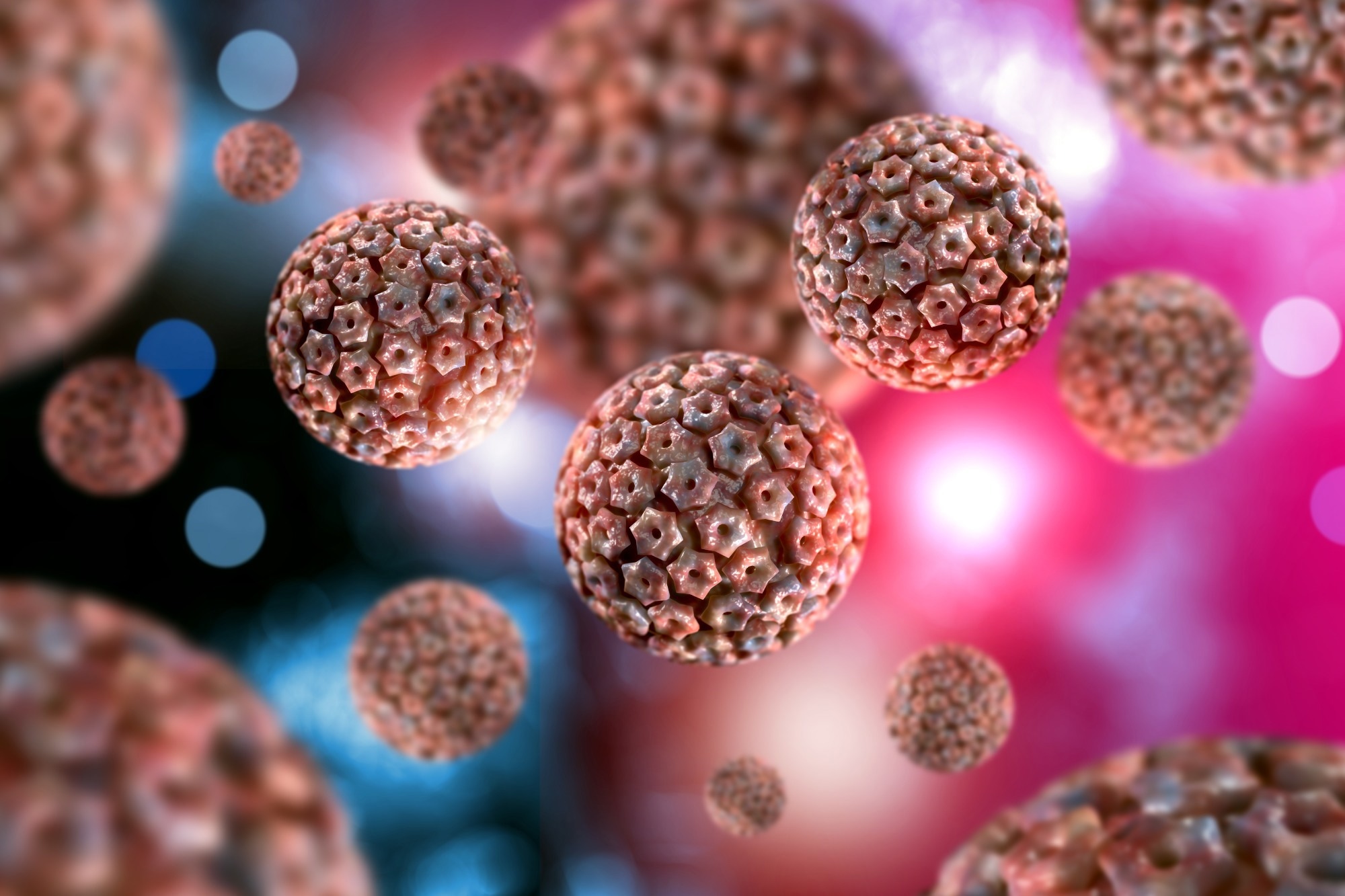 Image credit: Ezume Images/Shutterstock.com
The study focuses on how each human cell's nucleus holds the genetic machinery that copies DNA-encoded instructions during cell division and growth. Viruses enter human cells and hijack the cell’s machinery to replicate, but the dense structure of the nucleus can make this invasion more difficult.
The new study discovered that the herpes simplex virus utilizes a protein known as infected cell protein 4 (ICP4) to make the human nucleus more fluid-like, allowing the virus to multiply more easily.
The study, published in Molecular Cell, showed that preventing ICP4 from fluidizing the nuclear compartment reduced the rate of new viral copy production by 4-fold.
The physical state of the nucleus is a fundamental barrier that a virus must overcome to multiply. Viruses are masters at manipulating cells, and by studying their tricks, we uncover fundamental rules of biology.
Liam J. Holt, PhD, Professor, Department of Biochemistry and Molecular Pharmacology, NYU Grossman School of Medicine
The research team opted to examine herpes simplex virus 1 because it is one of the most common infectious diseases, with a 2025 study indicating that 64 % of individuals worldwide are infected for life, though many do not exhibit symptoms.
Room to Build
Viruses require space to construct relatively large structures known as condensates to multiply. These are dense droplets that concentrate molecules. Condensates operate as temporary factories for HSV-1, producing large quantities of virus within the host nucleus. If there is ample room to move around, small droplets combine into larger ones, which the researchers believe organize the viral reproductive machinery into a single location for greater efficiency.
The study's authors hypothesize that herpes simplex creates the space by exploiting a critical mechanism associated with structural alterations in human nuclei. There, DNA chains are known to wrap around protein spools called histones, all within a superstructure known as chromatin. The chromatin network of a normal nucleus makes it difficult to build viral condensate factories, much like attempting to fill a balloon inside a tight fishing net.
The study authors claim that because ICP4 binds to the proteins that prepare human cells for transcription – the process by which a section of the gene code is read by the cell’s machinery to transmit its message – it can prepare human nuclei for viral replication. However, the surrounding chromatin must receive the signal to unwind so that the transcription machinery can access the DNA and read any bit of code.
Previous research showed that ICP4 binds to chromatin remodeling protein complexes that unwind and alter the shape and mobility of chromatin. The current study demonstrated that ICP4 alone increased chromatin mobility. Importantly, the scientists did not see any alterations in the rate of transcription, which such motion often precedes.
Building on previous research, the study proposes that viral ICP4 binds to protein complexes that unwind DNA around histones, not to allow access to genes, but to induce unwinding. According to the researchers, this action modifies the physical characteristics of chromatin, relaxing the nuclear interior to enable increases in viral condensate size.
They claim that ICP4 can efficiently modify the characteristics of the infected nucleus to aid viral replication on its own, without the assistance of other known mechanisms, and can do so early in an infection.
The research team modified cells to create glowing protein nanoparticles, known as nucGEMs, to evaluate the physical characteristics of nuclei. To gauge the thickness of the nuclear environment, the researchers used microscopes to record videos of the particles in motion. The glowing particles bounced around significantly more when the scientists infected the cells with herpes simplex virus 1.
We are working now to confirm the mechanism by which ICP4 fluidizes the nucleus, which could give us new, specific targets to physically counter viral replication. We will also be looking to see if this mechanism is used by other viruses that replicate in the nucleus, from the double-stranded DNA viruses responsible for shingles to RNA viruses like the influenza virus to retroviruses like HIV.
Nora Herzog, PhD, Study First Author and Postdoctoral Fellow, Universitat de València Parc Cientific
 Intestinal Cells Use Signal Rhythms to Determine Cell Growth