Mizani, a 12-year-old male western lowland gorilla at the San Diego Zoo Safari Park, underwent a first-of-its-kind mastoidectomy to treat an infection that had spread into portions of his skull. The surgery was performed by a multidisciplinary team of wildlife health experts from the San Diego Zoo Safari Park and surgeons from UC San Diego Health.
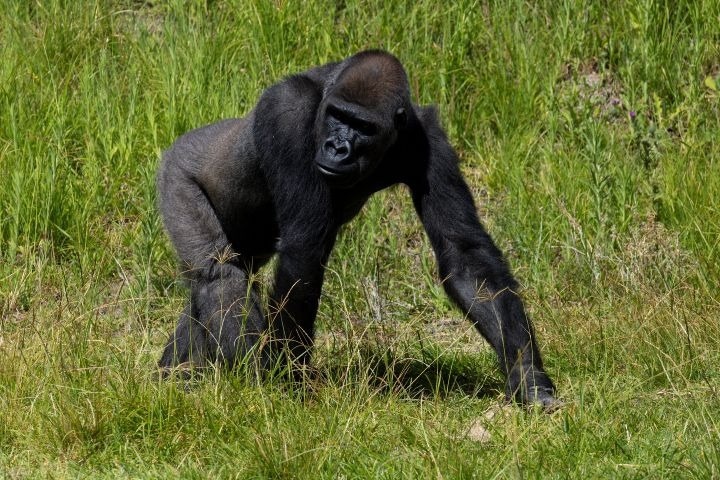 Image Credit: San Diego Zoo Wildlife Alliance
In March 2026, wildlife care specialists noticed that Mizani was reluctant to open his mouth fully, had a decreased appetite, and was exhibiting behaviors often associated with head pain, like holding his head while squinting his eyes. A CT scan performed at Safari Park’s Harter Veterinary Medical Center confirmed sinusitis and mastoiditis, an infection of the large bone behind the ear that can occur in both humans and gorillas. Based on the extent of the disease, wildlife health experts believe the condition likely developed before Mizani arrived at the Safari Park in November 2024.
Jeffrey Harris, MD, PhD, otolaryngologist-head and neck surgeon, and Kris Suresh, MD, resident fellow at UC San Diego Health, played a critical role in the procedure. While humans and gorillas share striking anatomical similarities, key differences exist. This anatomical overlap allowed the surgical team to adapt techniques from human medicine, drawing heavily on their expertise in skull base and ear surgery. However, because a search of scientific literature yielded no prior records of this specific procedure being performed on a gorilla, the team had to tread carefully.
“Our surgical team regularly performs complex mastoid and skull base procedures but applying that expertise to a critically ill gorilla required meticulous planning,” said Dr. Harris. “After carefully analyzing CT scans, we adapted our approach to account for the significant anatomical differences and proceeded with delicate microsurgery. We’re proud to bring this level of specialized care beyond the traditional clinical setting and we are incredibly gratified by Mizani’s recovery.”
While San Diego Zoo Wildlife Alliance frequently collaborates with human healthcare specialists on complex cases, this is believed to be the first reported mastoidectomy ever performed on a gorilla anywhere in the world. The procedure involved making an incision along the left side of Mizani’s head to access and drain the infected area, followed by removal of portions of infected mastoid bone and tissue and careful closure of the surgical site.
The surgery, performed at the Harter Veterinary Medical Center, lasted approximately five hours from anesthesia induction through recovery and involved more than 20 veterinarians, physicians, registered veterinary technicians, wildlife care specialists and support staff from both organizations.
This case was particularly unique because this disease is rarely seen in gorillas, making it a valuable learning opportunity for everyone involved, Even after working with gorillas throughout my career, I'm still learning something new every day. Procedures like this highlight how medicine can be remarkably similar across species, while also requiring very different approaches depending on the animal. I'm incredibly proud of how quickly our team and the doctors from UC San Diego Health came together for this monumental procedure."
Ryan Sadler, Senior Veterinarian, San Diego Zoo Safari Park
Mizani has continued to recover well following surgery. His most recent recheck exam in early June showed significant improvement with no indication of complications, and the procedure appears to have successfully resolved his condition. He will continue to be monitored and is scheduled for another recheck in one year unless clinical signs arise. In the meantime, he has returned to his troop and resumed his normal diet, activity level and daily routine.
As the Harter Veterinary Medical Center marks its 25th anniversary, cases like Mizani's reflect the hospital's longstanding commitment to advancing wildlife health through innovation, collaboration, and world-class veterinary care. Since opening in 2001, the facility has cared for more than 50,000 animals representing hundreds of species.
 Marine Carbohydrate Therapeutics: From Structural Diversity to Clinical Translation