A four-week clinical trial suggests that fermented tea seed oil may support sensitive skin by improving hydration and redness while altering skin lipids and selected microbial communities.
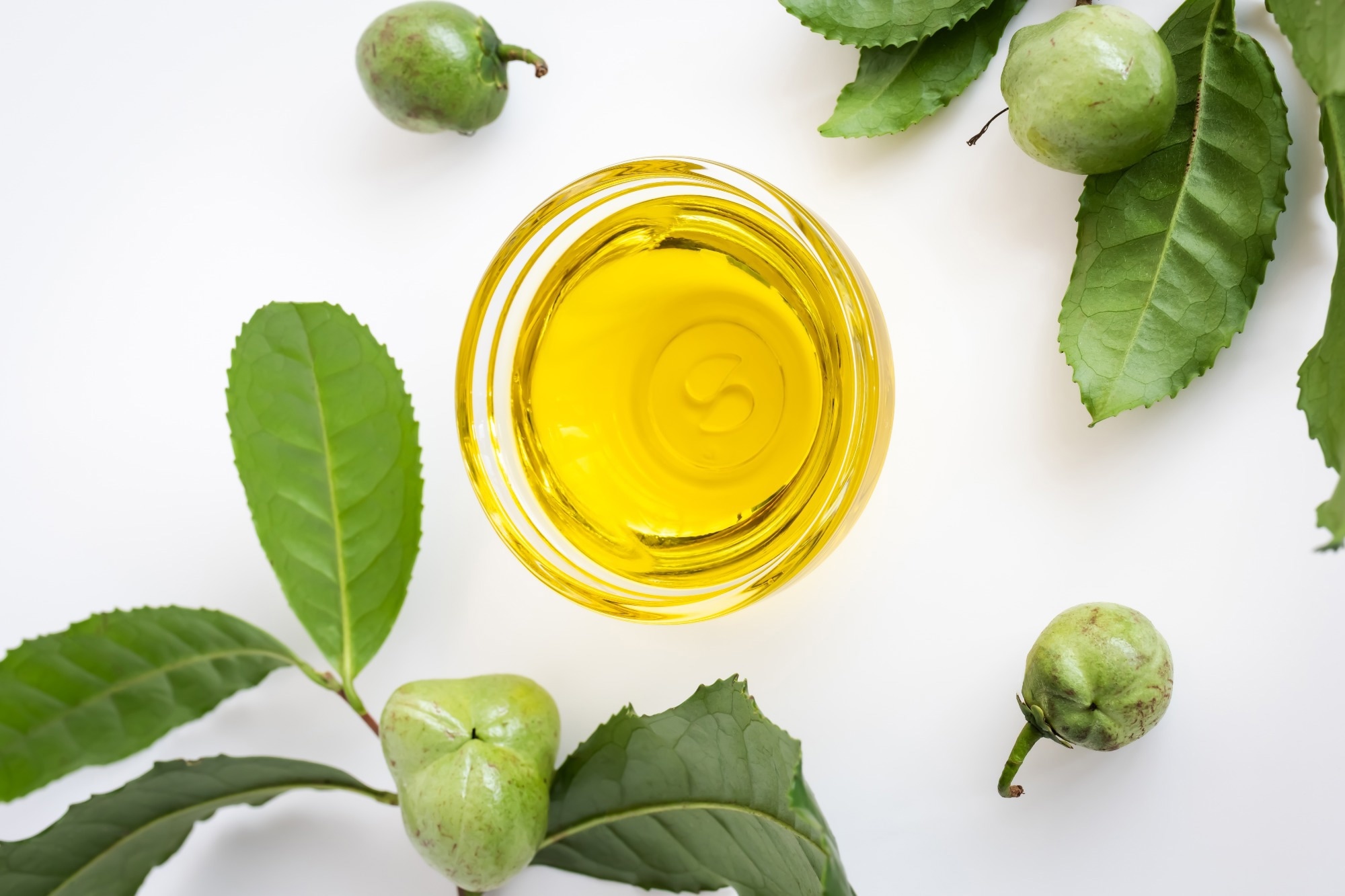
Study: Effects of fermented tea seed oil on the skin lipid barrier and microbiome of sensitive skin. Image Credit: Shironagasukujira / Shutterstock
In an article published in the International Journal of Cosmetic Science, researchers investigated the effects of a moisturizer containing 5% fermented tea seed oil on sensitive skin, focusing on its potential to support the skin lipid barrier and modulate the skin microbiome.
Sensitive Skin and Barrier Dysfunction
Sensitive skin is a common cutaneous syndrome characterized by heightened reactivity and, in some individuals, dryness, redness, or barrier dysfunction, often linked to compromised skin barrier function and alterations in the skin microbiome. Such disruption can lead to increased transepidermal water loss (TEWL) and allow irritants to penetrate more easily, contributing to the symptoms associated with sensitive skin.
Conventional treatments have targeted barrier repair and inflammation reduction but have varied in efficacy. Recently, natural oils with bioactive properties, such as tea seed oil, have attracted interest for their potential to enhance skin health. Fermentation of plant oils, a biotechnological process, may alter their composition and potentially increase the availability of certain bioactive components.
This study investigated the clinical effects of a fermented tea seed oil formulation and explored associated changes in skin lipids and the microbiome.
Fermented Tea Seed Oil Effects
The researchers conducted a randomized, double-blind, half-face controlled clinical trial involving 25 young Chinese women with sensitive skin. Participants applied a moisturizer containing 5% fermented tea seed oil to one side of their face and a base moisturizer without the oil to the other side for 4 weeks. This within-participant design helped account for individual differences in skin characteristics.
Physiological parameters, including skin hydration, redness, and instrument-assessed wrinkle appearance, were measured using non-invasive techniques. Ultra-performance liquid chromatography coupled with mass spectrometry (UPLC-QTOF-MS) was employed to analyze lipid profiles on the skin surface before and after treatment. High-throughput gene sequencing assessed changes in the skin microbiome.
Results showed 53 differential lipid species when tea seed oil was compared before and after fermentation, with DHA-CoA showing the most significant increase. DHA-CoA has the potential to influence fatty acid metabolism and membrane lipid composition, although the study did not establish it as the cause of the clinical effects.
Clinically, the study reported improvements in skin hydration, reduced redness, and measured wrinkle appearance over the four-week treatment period. Lipidomic analysis revealed 41 differential lipids in the experimental group, compared with 15 in the control group, indicating broader changes in the skin lipid profile after treatment.
Because both sides of the face received a moisturizer, improvements from baseline alone would not necessarily demonstrate an ingredient-specific effect without corresponding between-side comparisons. These lipid changes may be relevant to hydration and skin barrier function. However, the study did not directly demonstrate that individual lipid changes caused the observed clinical improvements.
Microbiome analysis found no significant alterations in overall microbial diversity or abundance but revealed changes in microbial composition. The relative abundance of Propionibacterium acnes, now commonly classified as Cutibacterium acnes, decreased, while the relative abundance of Streptococcus increased.
The researchers interpreted these changes as potentially relevant to skin barrier function, sensitivity, or inflammation, although the study did not establish a causal relationship or demonstrate that the microbial shifts mediated the clinical findings.
Lipidomics and Microbiome Insights
The findings emphasize the potential of fermented tea seed oil as a sensitive skin-care ingredient and show that its use is associated with changes in the skin lipid profile and selected microbial taxa. The increased DHA-CoA content after fermentation may be relevant to fatty acid metabolism and the formation or maintenance of membrane lipids, but its mechanistic role remains provisional.
Changes in the abundance of skin lipids involved in stratum corneum organization may be consistent with support for the skin’s natural barrier and its ability to retain moisture. However, the trial did not directly measure the biological activity of individual lipid species or establish that they were responsible for the clinical effects.
Ceramides and other epidermal lipids are central to barrier organization and water retention. However, the clinical trial primarily identified associations between treatment, altered lipid profiles, and improvements in hydration, redness, and measured wrinkle appearance, rather than directly testing the biological activity of individual lipid species.
The reduction in the relative abundance of C. acnes, a common skin commensal that can contribute to acne-associated inflammation under some conditions, and the rise of Streptococcus suggest that fermented tea seed oil altered selected microbial taxa without significantly disrupting overall microbial diversity. The clinical significance of these compositional changes remains uncertain, and the trial did not demonstrate that they directly mediated the clinical effects.
The double-blind, half-face design strengthened the internal validity of the clinical trial by controlling individual variability in skin properties. The use of advanced lipidomics and microbiome sequencing allowed the researchers to examine molecular and microbial changes associated with treatment. However, the small sample and short follow-up limit conclusions about uncommon adverse effects and long-term safety. The trial also lacked a moisturizer containing unfermented tea seed oil, so it could not determine whether fermentation improved clinical efficacy compared with conventional tea seed oil.
Clinical Implications for Sensitive Skin
In conclusion, a moisturizer containing 5% fermented tea seed oil was associated with improvements in hydration, redness, and measured wrinkle appearance, together with changes in skin lipid profiles and selected microbial taxa. The enrichment of DHA-CoA after fermentation and the broader changes in skin lipids may provide possible explanations for the observed clinical findings, but their mechanistic roles were not established.
Additionally, the observed microbial shifts were interpreted as potentially relevant to barrier repair and sensitivity. These findings support further investigation of fermented tea seed oil as a potential ingredient for sensitive skin care, combining possible lipid barrier support with microbiome modulation.
However, the study involved only 25 young Chinese women and lasted four weeks, limiting its generalizability to men, older adults, other ethnic groups, and people with clinically diagnosed skin disorders. It also did not compare fermented and unfermented tea seed oil formulations. Further studies should assess long-term effects, confirm the proposed mechanisms, and test the formulation in larger and more diverse populations.
 How Touch Science Shapes Better Cosmetic Products