Researchers at Mayo Clinic have identified a protein that cancer cells use to suppress the body's immune response, a finding that could support the development of new treatments to improve the effectiveness of cancer immunotherapies.
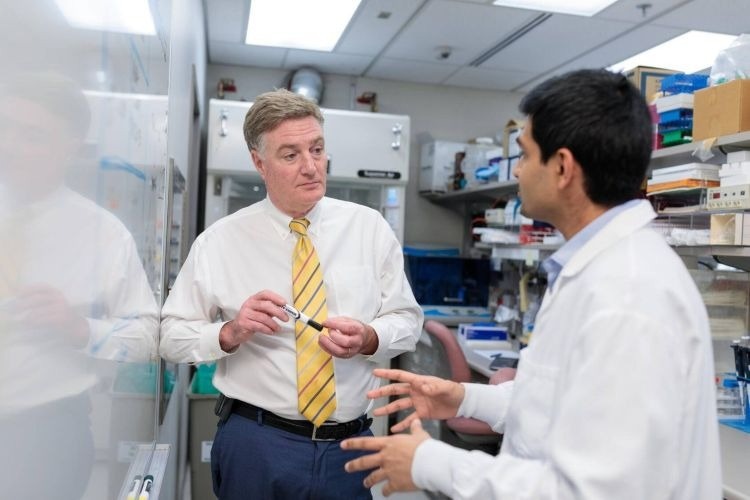 Image Credit: Mayo Clinic
Published in the Journal of Clinical Investigation, the study demonstrates a previously unrecognized function of the protein TRAILshort, which acts as an immune system "off switch."
The investigators identified that TRAILshort inhibits T cells – the primary cancer-destroying units of the immune system – from recognizing and destroying malignant cells as well as virus-infected cells.
In preclinical testing, inhibiting this protein successfully reactivated T-cell performance and boosted the overall immune response.
The researchers also discovered that TRAILshort decreases the effectiveness of chimeric antigen receptor T-cell therapy (CAR-T cell therapy), one of the most advanced types of cancer immunotherapy. Their findings indicate that therapies targeting TRAILshort could enhance CAR-T treatment and may also improve the effectiveness of other immune-based cancer therapies.
What strikes me most is that TRAILshort appears in cancer, HIV, COVID-19, tuberculosis, lupus and Crohn's disease – almost every condition where the immune system is failing or misfiring. That tells us we may have identified a fundamental switch in human immunity, not just a curiosity in one disease.
Andrew Badley, M.D., Study Senior Author, Mayo Clinic
Dr. Badley is the HH Sheikh Khalifa Bin Zayed Al Nahyan Professor of Infectious Diseases and an immunologist at Mayo Clinic.
How Cancer Disrupts the Immune Response
Researchers at Mayo Clinic first identified TRAILshort while investigating HIV nearly 15 years ago. In 2020, they discovered that cancer cells also produce the protein, although the mechanism by which it suppressed T-cell activity was still unknown. This research identifies that mechanism for the first time.
The researchers detected elevated levels of TRAILshort in melanoma, breast, lung, pancreatic, and ovarian cancers, as well as Hodgkin lymphoma. Increased levels were also observed in infectious diseases, including COVID-19, tuberculosis, and hepatitis C.
By using highly specific antibodies and engineered preclinical models, the team discovered that TRAILshort activates SHP-1, a protein that functions as a molecular brake by shutting down T cells before they can attack diseased cells.
"This is the first study to show that TRAILshort doesn't just block cell death – it also acts as a signaling molecule that directly suppresses T-cell activity," says Shahrzad Jalali, Ph.D., a research scientist at Mayo Clinic and lead author of the study. "That reveals an entirely new role for the protein in regulating the immune response."
Why TRAILshort is a Potential Target for New Therapies
The observations point to several potential therapeutic applications.
Investigators discovered that TRAILshort markedly diminished the capacity of CAR-T therapy to suppress tumor growth in preclinical models. Inhibiting the protein reactivated immune performance, indicating that targeting TRAILshort may offer a fresh approach to enhance CAR-T treatment alongside other immunotherapies.
The researchers suggest that TRAILshort could function as a biomarker to help pinpoint tumors with a higher likelihood of responding to targeted therapies.
"Discovering the role of TRAILshort and how it inhibits CAR-T cells opens the door for a new therapeutic strategy to improve their activity," says Saad Kenderian, M.B. Ch.B., an oncologist at Mayo Clinic Comprehensive Cancer Center and study co-author. "This is an important step as we work to make CAR-T therapy more effective for patients with cancer."
In addition to cancer, investigators suggest TRAILshort might ultimately provide a method to selectively decrease detrimental immune responses in autoimmune conditions or transplantation without causing immunosuppression.
In cancer, there's too much TRAILshort, so our goal is to get rid of it with antibodies that remove it. In autoimmune disease, there's not enough TRAILshort, so our goal is to deliver more.
Andrew Badley, M.D., Study Senior Author, Mayo Clinic
Further studies are required to determine whether these approaches are safe and effective in patients.
What excites us most is that this discovery gives us a new, actionable way to regulate the immune system. By targeting TRAILshort, we may be able to strengthen immune responses against cancer and chronic infections or, in other diseases, reduce harmful immune activity.
Andrew Badley, M.D., Study Senior Author, Mayo Clinic
This research is part of a broader Mayo Clinic initiative known as Precure Research. The initiative is focused on developing tools that help clinicians identify and address disease-related changes earlier, before symptoms develop or conditions become more difficult to treat.
This discovery defines the molecular mechanism responsible for T-cell failure across cancer and chronic infection, providing researchers with a specific target and a framework for therapeutic development.
Source:
Journal reference:
Jalali, S., et al. (2026) TRAIL splice variant TRAILshort disrupts T cell receptor signaling and promotes immune tolerance in vivo. Journal of Clinical Investigation. DOI:10.1172/jci194449. https://www.jci.org/articles/view/194449
 New AI Model Unites Protein Sequences and Structures for Evolutionary Insights