Improving and maintaining woodlands in deprived communities is linked with reduced antidepressant and anti-anxiety medication use, research suggests.
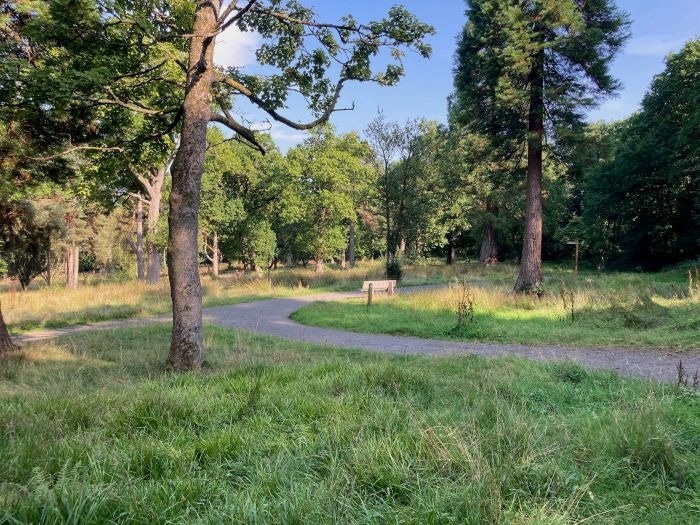 CallendarWood WIAT. Image Credit: The University of Edinburgh
People living in deprived communities are less likely to use medication for depression and anxiety if they have easy access to well-maintained woodlands, the study found.
Researchers at the Universities of Edinburgh and Glasgow analyzed data from more than 129,000 people over five years.
The study is one of the largest analyzes of its kind, assessing how investments in local woodlands in and around towns in Scotland affect people's mental health.
The researchers used NHS prescription records and census data to see whether people living within a 10-minute walk of an improved woodland area were more or less likely to be taking medication for depression or anxiety.
Woodland improvements had been supported through Scottish Forestry's Woods In and Around Towns (WIAT) initiative, which provided funding for practical improvements such as new footpaths, better signage, and community events.
The initiative prioritized areas that were more socially and financially disadvantaged, where woodlands required improved management to reduce barriers and enable more local people to use and enjoy them.
People living in urban deprived communities that were close to a woodland area that had been made more welcoming and easier for people to use were 10 percent less likely to be prescribed antidepressants and six percent less like to be prescribed anti-anxiety medication, than those living further away.
This was the case even when accounting for other factors linked to mental health outcomes, such as demographics and poverty.
The benefit of living near these woodlands showed up for the same people even when their proximity to these woodlands changed. For example, when someone moved closer to an improved woodland, their need for medication went down.
By tracking the same individuals over time, the researchers say they can be more confident that it was the woodland improvements making the difference, rather than simply healthier or wealthier people happening to live in greener areas.
The research provides stronger evidence on the mental health benefits of woodland improvements for local communities than was possible in earlier studies. It also shows that these benefits may contribute to reducing inequalities in health across the population.”
Catharine Ward Thompson, Study Lead and Professor, OPENspace Research Centre, College of Art, University of Edinburgh
Dr Scott Ogletree, of the OPENspace Research Centre at the University of Edinburgh’s College of Art, who undertook the analysis, said: “For the first time, we have an opportunity to link data on mental health services with a long-term national urban forestry intervention program to offer the kind of evidence required to inform future forestry policy.
Our results tell us that relatively modest investments in local greenspaces can make a real difference to people's mental health. Nature focused initiatives like WIAT can be a valuable tool to complement ongoing efforts to improve wellbeing and mental health.”
Around one in eight people globally live with a mental health condition, and those in poorer communities tend to be hit hardest. At the same time, these are often the communities with the least access to good quality parks, woodlands, and greenspaces.
The researchers say that their findings make a case for integrating nature-based interventions into public health strategies, particularly in urban areas where greenspace can be limited and poorly maintained in certain neighborhoods.
The research team have worked with experts from Scottish Forestry and Forest Research for over 20 years to gather evidence on the social and health benefits that local woodlands can offer to communities, pioneering work on this topic within Europe.
Minister for Agriculture, Marine and the Islands Jim Fairlie, said: “This groundbreaking study provides further compelling evidence of the benefits that local woodlands deliver for people and communities. The association between the investment in woods in and around Scotland’s towns and cities, and lower prescription use for depression, and anxiety highlights the importance of continuing to expand, manage and improve these valuable green spaces.
“The Scottish Government is committed to increasing woodland creation across Scotland, with a target of 18,000 hectares per year by 2029/30. We are also committed to increase tree planting in urban areas to improve air quality, support biodiversity and enhance quality of life for communities across the country.”
The research used census data from the Scottish Longitudinal Study which tracks the lives and health of thousands of people in Scotland to help researchers understand what affects people’s wellbeing.
The research was supported by the Economic and Social Research Council (ESRC) and the GroundsWell Consortium, a UK-wide research partnership funded by the UK Prevention Research Partnership (UKPRP), that studies how green and blue spaces, can improve health and reduce health inequalities.
 Dr. GPCR and Eurofins Discovery Join Forces to Advance GPCR Drug Discovery