Genes don’t always pass only from parent to offspring. Some organisms such as bacteria and plants can pick up genetic material from related or unrelated species through a phenomenon known as horizontal gene transfer. A recent study published in Plant Physiology documents a striking case of this process in Cuscuta, a parasitic vine that appears to have absorbed a functional gene (CYP81Q) encoding the enzyme piperitol/sesamin synthase (PSS) from a host plant in the order Lamiales and repurposed it to produce sesamin.
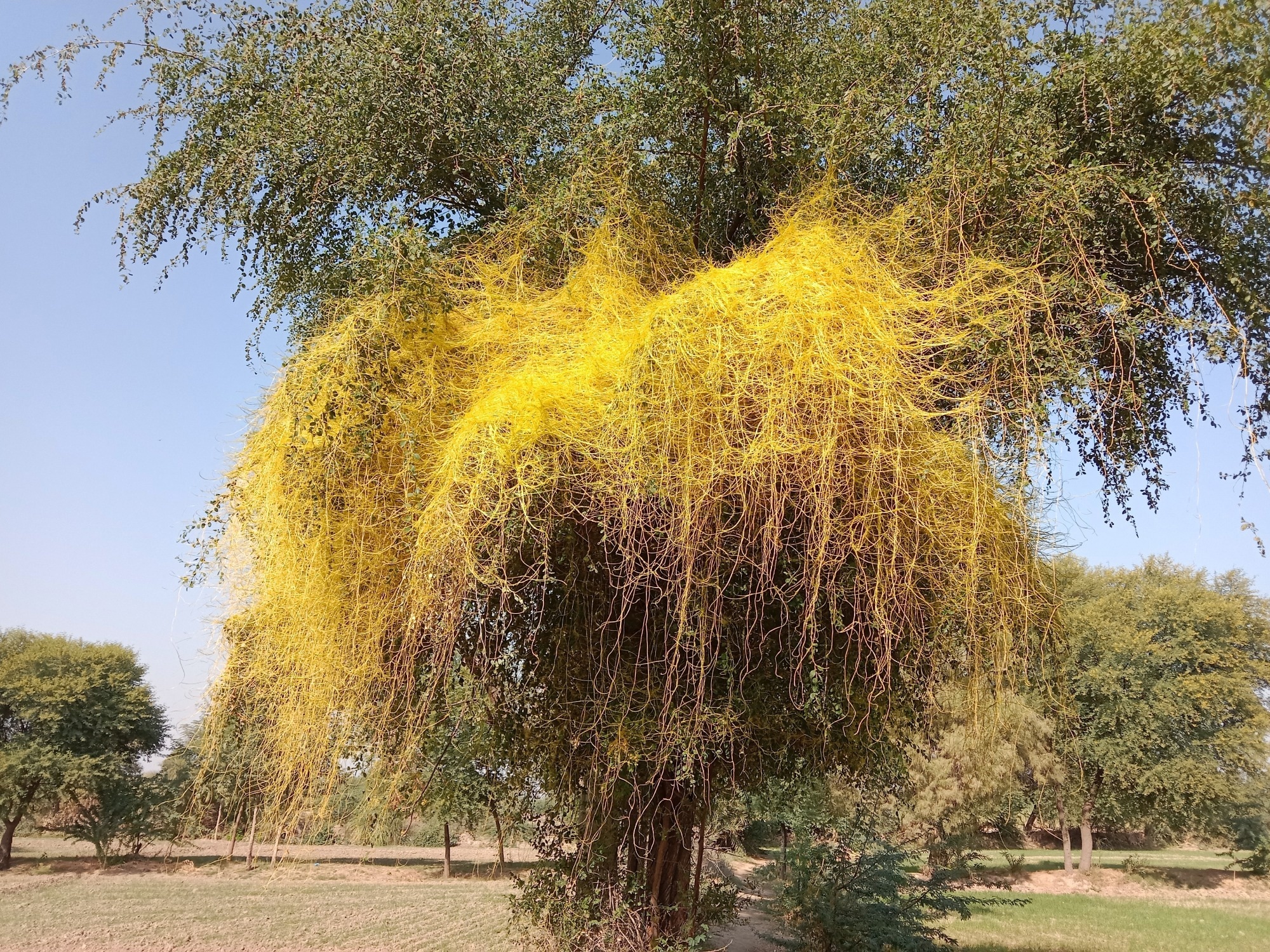 Study: Transposon-colonized intron gain follows parasitism-mediated horizontal transfer of a cytochrome P450 gene. Image Credit: AlyarMSD/Shutterstock.com
Parallel or Convergent Evolution
Specialized plant metabolites found in plant lineages that don’t share a common evolutionary history have often been attributed to parallel or convergent evolution. Sesamin, a lignan compound, is one such metabolite. While it is predominantly found in Sesamum indicum (sesame) and its relatives within the Lamiales order, sesamin has also occasionally been found in plants unrelated to sesame, such as Magnolia, Piper, and Ginkgo.
Parasitic plants add another layer of complexity to plant chemistry, since they attach directly to host tissue and draw nutrients across a specialized feeding structure called a haustorium. Recent research shows that some parasitic plants acquire functional genes directly from their hosts through horizontal gene transfer. However, how such genes become stably integrated and biochemically active within a new genome remains poorly understood.
About the Study
In the study, the researchers measured lignan content in floral tissue and seeds collected from several Cuscuta species, including Cuscuta campestris, Cuscuta chinensis, Cuscuta europaea, and Cuscuta epithymum, along with samples from the host plants these parasites fed on. Liquid chromatography coupled with mass spectrometry allowed the team to detect and confirm sesamin in parasite tissue and compare it with an authentic standard.
To identify the genetic basis for this chemical production, the researchers searched published Cuscuta genome assemblies for sequences resembling the cytochrome P450 monooxygenase from S. indicum known as SiCYP81Q1. This gene encodes the sesamin-producing enzyme PSS in sesame.
This search uncovered several candidate genes across different Cuscuta species and subgenera. The team then compared the exon and intron arrangement of these candidate genes against those found in sesame and other related Lamiales plants, and constructed phylogenetic trees to determine how closely the Cuscuta sequences related to known sesamin synthase genes.
To test whether these candidate genes actually functioned as sesamin synthases, the researchers introduced them into yeast cells along with a partner enzyme needed for the reaction, then supplied the yeast with a precursor compound and analyzed the resulting products.
Separately, the team examined whether the genomic regions surrounding these genes matched patterns found in related plant families, a technique called synteny analysis, to assess whether the genes had arrived through gene transfer rather than ordinary inheritance. The team also searched for transposon signatures embedded in the introns of the candidate genes using sequence comparison methods.
Horizontal Gene Transfer
The study found that Cuscuta plants produce sesamin using genes captured from a Lamiales host through horizontal gene transfer.
Sesamin and related lignans were detected in floral tissue or stems across four Cuscuta species, while the specific host plants examined did not produce these compounds themselves, indicating that the parasite synthesizes sesamin on its own rather than absorbing it directly from its host.
Eight distinct CYP81Q genes were identified across the sampled Cuscuta species, and these genes share 78% to 95% amino acid similarity with the sesame gene SiCYP81Q1.
When expressed in yeast, each gene produced a functional enzyme that converted a precursor compound into sesamin through the same two-step chemical process used by sesame, and the resulting product matched the expected molecular structure exactly.
Genomic comparisons revealed that these Cuscuta genes sit within a stretch of deoxyribonucleic acid (DNA) whose gene order matches that of other plants in the Solanales order, a pattern absent from the sesame genome itself. This arrangement, combined with the estimated timing of divergence between plant lineages, pointed to a transfer event occurring between 50 and 32 million years ago, well after Cuscuta had separated from its closest non-parasitic relatives.
Compared with the single short intron found in the sesame version of this gene, the Cuscuta copies carried two or three introns, many of which showed signs of colonization by mobile DNA elements.
A broader survey of other genes acquired through similar transfer events in one Cuscuta species revealed a tendency to gain introns. This suggested that this restructuring could be a general feature of how the parasite integrates foreign genetic material rather than something unique to sesamin production.
While the precise mechanism connecting host and parasite genomes could not be fully resolved, the researchers believe the evidence points to ribonucleic acid (RNA), rather than direct DNA transfer, as one plausible route.
A Rare Example of Horizontal Gene Transfer
Overall, the study revealed how a parasitic plant can capture a functional gene from a host species and maintain it as an active, biochemically capable component of its own genome across millions of years.
The findings offer a rare, detailed example of how horizontal gene transfer, combined with subsequent intron gain and transposon activity, can reshape a borrowed gene while preserving its original biochemical function in a distantly related organism.
Journal reference:
Ono, E., Shimizu, K., Murata, J., Segawa, T., Shiraishi, A., Yokoyama, R., Toyonaga, H., Takagawa, M., Horikawa, M., Hoshino, A., & Aoki, K. (2026). Transposon-colonized intron gain follows parasitism-mediated horizontal transfer of a cytochrome P450 gene. Plant Physiology, 201(2), kiag335. https://academic.oup.com/plphys/article/201/2/kiag335/8722230
 How Can Stressed Mitochondria Actually Protect Your Heart?