Scientists discover why thousands of rare E. coli genes preserve metabolism instead of creating entirely new biochemical pathways.
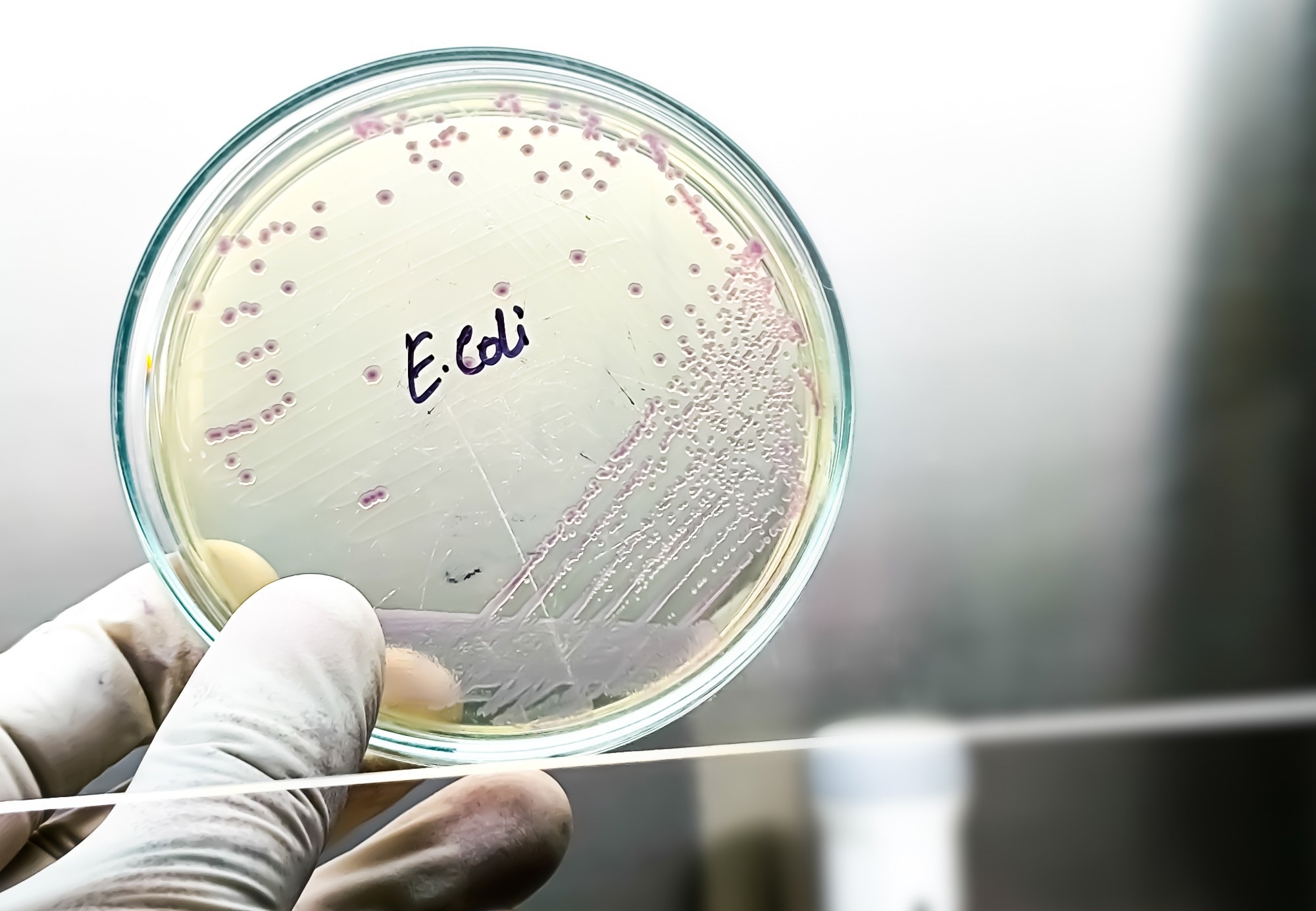 Study: Annotating the pangenome reveals the diversity in the genetic basis for metabolic enzymes. Image credit: Saiful52/Shutterstock.com
A recent study published in Science Advances mapped genes from more than 2,000 E. coli genomes onto metabolic reactions to uncover the hidden diversity beneath a seemingly uniform metabolism.
Scientists Investigate The Hidden Role Of Rare Genes
Some strains of Escherichia coli carry rare genes or gene variants found in no other strain. Scientists have long wondered about the function of these rare stretches of the genome, given that nearly every E. coli strain uses the same core set of genes for all essential metabolic reactions.
Sequencing studies have shown that bacterial genomes contain genes shared by almost every strain, genes present in only some strains, and rare genes found in just a handful of strains. While E. coli is known to carry a vast collection of these rare genes, what many of them do has remained largely unknown.
Genome-scale metabolic models already link many genes to the chemical reactions bacteria carry out and can predict growth and biochemical capabilities with substantial accuracy for individual strains. What is missing is a species-wide version of that map, one that connects the full spread of rare, shared, and common genes to the reactions they encode across an entire pangenome.
Without this broader understanding, it is difficult to determine whether rare genes introduce novel proteins into bacterial metabolism or simply provide alternative versions of existing functions.
Building A Species-Wide Map Of Bacterial Metabolism
In the present study, the research team built a pangenome from 2,377 complete E. coli genomes obtained from public repositories, retaining only assemblies that passed quality checks for completeness and the absence of contamination. They then grouped the coding sequences into clusters of related genes using standard clustering software, and each cluster was classified as core (present in nearly every genome), accessory (present in some genomes), or rare (found in only a few strains).
To connect these clusters to metabolic function, the team mapped them onto an existing library of gene-to-protein-to-reaction associations (GPRs) built for related bacteria, and filled the gaps using additional metabolic databases. This produced a set of GPRs covering over 2,700 reactions and more than 13,500 gene clusters. Using this resource, the researchers built a single computational model capable of simulating metabolism across nearly every sequenced genome in the collection.
To assess how well the model captured real metabolism, the team also tested a separate panel of 59 laboratory E. coli strains, growing each strain on 96 different carbon sources and comparing observed growth with model predictions.
The researchers also traced individual genes in detail, examining their chromosomal location, the genes surrounding them, and their similarity to related copies, to determine how genes were lost, replaced, or acquired from other bacteria over time. Structural modeling tools were used to predict the three-dimensional shapes of selected enzyme variants and estimate how their activity might differ.
Rare Genes Preserve Rather Than Expand Metabolism
The study found that most of E. coli's rare genetic material reshapes the genetic basis of reactions that already exist, rather than adding new biochemistry to the species. Of the more than 13,000 metabolic gene clusters identified across the pangenome, nearly 88% were rare.
However, only 35 of the corresponding metabolic reactions were themselves rare. Most of that rare genetic material consisted of pseudogene copies of genes already present in the core or accessory genome, along with diverged genes acquired from other bacteria that still perform the same job as the corresponding core genes. These findings show that while the E. coli pangenome remains open and continues to accumulate rare genes, its overall repertoire of metabolic reactions remains largely closed.
Approximately 100 reactions out of more than 2,700 showed unusually high genetic variability, indicating that several distinct gene clusters were carrying out the same reaction. These hotspots clustered around specific essential processes, such as nutrient transport, energy generation, carbohydrate breakdown, amino acid production, synthesis of cell walls and cell membranes, and vitamin and cofactor metabolism.
In one example, a gene linked to the cyclic diguanosine monophosphate (c-di-GMP) pathway was encoded by 17 distinct gene clusters, some intact despite sitting in entirely different genome locations. Interestingly, in the tryptophan biosynthesis pathway, an essential enzymatic step was carried out by rare, horizontally transferred gene variants in strains that lacked the usual core gene altogether.
Furthermore, when the computational model was tested against laboratory measurements from 59 strains grown on various carbon sources, the growth predictions matched experimental results with about 99% precision and accuracy. However, the authors noted that their analysis relied only on complete, publicly available genomes, which could skew the findings toward clinical strains and may underrepresent the diversity found in environmental or agricultural E. coli.
An Open Pangenome With A Closed Reactome
In summary, the study revealed that most rare genes encode alternative versions of enzymes that carry out existing metabolic reactions rather than expanding the species' repertoire of metabolic reactions. This also highlights specific pathways as hotspots shaped by gene loss and horizontal gene transfer from other bacteria. These findings have provided researchers with a species-wide framework that links genotype to phenotype, but also cautions against targeting single gene variants when designing future antibacterial therapies
Download your PDF copy by clicking here.
Journal Reference
Ardalani, O., Phaneuf, P. V., Krishnan, K. J., Pride, D., Nielsen, L. K., & Palsson, B. O. (2026). Annotating the pangenome reveals the diversity in the genetic basis for metabolic enzymes. Science Advances, 12(27), eaeb3363. DOI:10.1126/sciadv.aeb3363. https://www.science.org/doi/10.1126/sciadv.aeb3363
 GLP-1 Drugs Show Promise Against Long COVID-Related Lung Scarring