Managing post-meal blood glucose spikes is a critical focus in diabetes treatment. Clinical studies show that consuming vegetables, protein, or fat prior to carbohydrates can lower post-meal blood sugar levels. This makes meal sequencing an easy, sustainable dietary strategy.
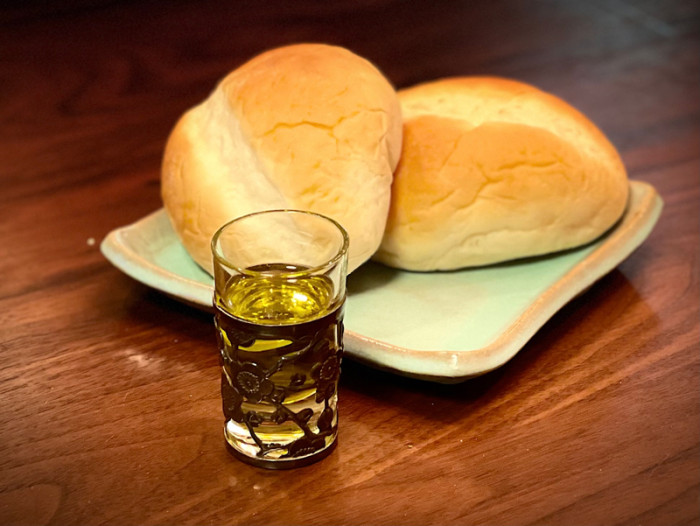 Olive oil administered before carbohydrates elicits early glucagon and GLP-1 responses that act in a partially redundant manner and, with involvement of vagal pathways, slow gastric emptying and attenuate the early post-meal glucose. Image Credit: KyotoU / Daisuke Yabe
Scientists frequently link the advantages of this method to delayed gastric emptying and increased secretion of incretin hormones like GLP-1, which lower blood glucose. The exact roles of neural pathways and gut and pancreatic hormones in this process are not fully understood.
This lack of clarity prompted an international research team to study how the timing of fat consumption affects glucose levels, hormone secretion, and gastric emptying.
Our group has long been interested in practical dietary approaches that people can continue in everyday life. Meal-sequencing is appealing because it merely changes how a meal is eaten rather than requiring people to avoid entire food groups.
Daisuke Yabe, Study Corresponding Author, Kyoto University
In this study, researchers fasted mice overnight and split them into three groups: one received water before glucose, another received olive oil 15 minutes before glucose, and the last received glucose 15 minutes before olive oil. The team then tracked the animals' blood glucose, plasma insulin, glucagon, GIP, and GLP-1 levels. The researchers also administered acetaminophen to estimate gastric emptying by measuring its concentration in the blood.
The scientists replicated these procedures across several other mouse groups, including models with type 2 diabetes and mice deficient in the GLP-1 receptor. They conducted additional tests that involved blocking glucagon or GLP-1 signaling, performing bilateral sub-diaphragmatic vagus nerve ligation, and evaluating alternative dietary fats to confirm the effects were not unique to olive oil to further validate the findings.
The study demonstrated that administering olive oil before glucose, rather than after, blunted the initial spike in blood sugar and slowed down gastric emptying. Preloading with fat also triggered the rapid release of glucagon, GIP, and GLP-1. These positive outcomes persisted even in mice with type 2 diabetes and severe insulin deficiency.
The researchers found that the olive oil preload's glucose-lowering effect was only reduced when glucagon and GLP-1 signaling were inhibited together, rather than individually. This indicates that glucagon signaling, known for increasing blood sugar, also plays a role in lowering glucose after an olive oil preload in mice. Vagus nerve ligation experiments indicated that vagal pathways are involved in these responses.
The study provides strong scientific support for evaluating practical meal-sequencing strategies in human clinical trials for both diabetic and non-diabetic individuals by uncovering the biological mechanisms behind how food order impacts post-meal blood sugar.
Our findings suggest that the order in which nutrients reach the gut can engage a coordinated hormone-nerve response that changes how quickly the stomach delivers glucose to the intestine.
Daisuke Yabe, Study Corresponding Author, Kyoto University
Source:
Journal reference:
Liu, Y., et al. (2026) Olive Oil Before Oral Glucose Delays Gastric Emptying and Lowers Glycemia Through Partially Redundant Glucagon and GLP-1 Signaling in Mice. Diabetes Journal. DOI:10.2337/db26-0531. https://diabetesjournals.org/diabetes/article/doi/10.2337/db26-0531/172660/Olive-Oil-Before-Oral-Glucose-Delays-Gastric
 Ultra-High-Resolution 3D Microscopy Captures Distinct Presynaptic Protein Organization States