Species reduced to fewer than 50 individuals in the wild are not automatically doomed to extinction, according to a major study co-authored by researchers at the Zoological Society of London and Monash University.
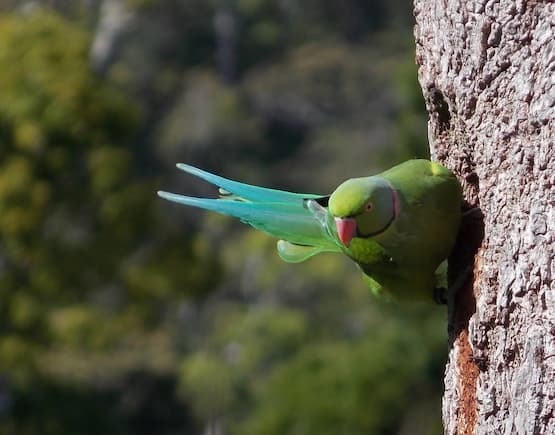
Echo parakeet. Image Credit: Dr. Donal Smith
The findings, published in Proceedings of the Royal Society B, challenge long-standing ecological theories that severely bottlenecked animal populations inevitably collapse due to inbreeding and loss of genetic diversity.
By reviewing every bird and mammal species known to have fallen below 50 wild individuals since 1950, researchers found that active, targeted conservation can successfully turn the tide for species on the very edge of survival.
Lead author Dr. Donal Smith, from the Monash University School of Biological Sciences, said the findings offer an empirically grounded note of hope for global biodiversity.
For decades, conservation decisions have been influenced by the idea that once a population drops below a certain threshold, recovery is severely inhibited by smallness itself due to genetic or demographic factors. Our work shows that population size alone shouldn't determine whether we give up on a species. When we actively tackle the external pressures driving their decline and directly support their numbers, small populations show a striking capability to recover.”
Dr. Donal Smith, Study Lead Author, School of Biological Sciences, Monash University
The study evaluated 141 bird and mammal species with sufficient tracked history. Of the 51 species that received direct conservation action, such as invasive predator control, habitat restoration, captive breeding or translocations, 61 per cent recovered to at least 100 individuals. In contrast, 37 per cent of species that received no direct support went extinct, and only two per cent to at least 100 individuals.
Combining threat mitigation with direct population management yielded the highest rates of success, driving recoveries in iconic species such as Australia's Lord Howe woodhen, which rebounded from just 23 birds in the late 1970s to more than 1600 today.
Co-author Professor Rohan Clarke, also from the Monash School of Biological Sciences, said the research presents a strong case against writing off species through hardline conservation triage tactics.
“Abandoning critically endangered species because their numbers look too low is a mistake,” Professor Clarke said.
“While genetic risks are real, our history shows that human intervention works. Investing in active, science-backed management isn't futile, rather it’s the very thing that saves a species from disappearing forever.”
 New Research Reveals Strong Public Support for National Parks’ Role in Wellbeing, Nature and Climate Action