Researchers have uncovered how the memory-related protein Arc packages tau into extracellular vesicles, revealing a key mechanism behind the spread of Alzheimer's disease and highlighting a promising new therapeutic pathway.
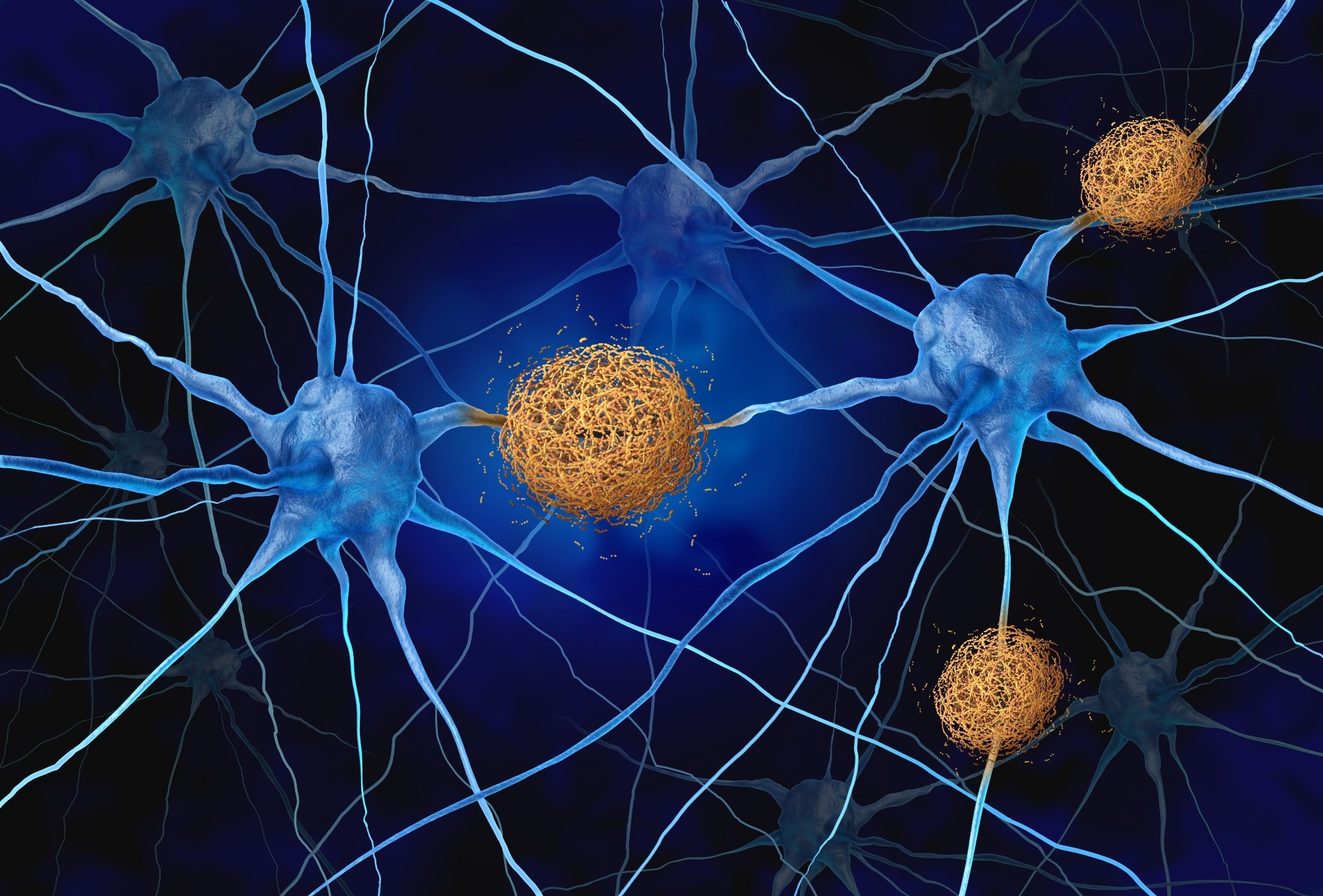 Study: Arc mediates intercellular tau transmission via extracellular vesicles. Image credit: Lightspring/Shutterstock.com
In a recent study published in Cell, researchers identified the neuronal protein Arc, better known for its role in memory formation, as a molecular mediator that binds tau and helps package it into extracellular vesicles, casting more light on how the disease spreads.
How Tau Travels Between Brain Cells
Although the correlation between tau transmission and cognitive decline in Alzheimer’s disease is well established, the molecular machinery governing the release and transmission of tau proteins between neurons remains largely undefined.
Tangled clumps of tau protein inside brain cells are a hallmark of Alzheimer's disease. Normally, tau proteins help stabilize the internal scaffolding of neurons, but with age, they can become chemically altered and misfold.
Experimental evidence indicates that this altered tau does not stay confined to one cell. It moves along connected neural circuits, and the increased spread of misfolded tau proteins is linked to worsening cognitive symptoms in patients.
Some tau is released as a free protein, while some travels packaged inside extracellular vesicles. Once these vesicle-bound tau proteins are taken up by a healthy neuron, the misfolded tau can corrupt the normal protein inside that cell, restarting the cycle. Although extracellular-vesicle-associated tau has been implicated in the spread of Alzheimer's disease pathology, researchers have lacked a clear picture of how the tau protein gets loaded into these vesicles.
Understanding this mechanism is essential, as vesicle membranes may shield tau from certain extracellular antibody therapies, although it remains unknown whether this limits treatment efficacy in patients.
Testing Arc's Role Across Cells, Mice, and Humans
In the present study, the research team combined experiments in cultured neurons, genetically engineered mice, and postmortem human brain tissue to investigate how tau proteins are packaged into extracellular vesicles. The work focused on Arc, a neuronal protein best known for its role in memory formation and synaptic plasticity.
The researchers compared normal neurons with neurons lacking Arc to determine whether the protein was required for loading tau into extracellular vesicles. They also examined mice that expressed a disease-causing form of human tau but lacked Arc, allowing them to investigate how the protein influenced tau release, transmission, and accumulation in the brain.
To determine whether vesicle-bound tau could spread disease, the team tested whether isolated vesicles could trigger tau aggregation in specialized biosensor cells and tracked tau transmission between neurons in both cultured cells and living mice.
Finally, the researchers analyzed postmortem brain tissue from people with Alzheimer's disease and age-matched controls to determine whether the same Arc–tau interactions occurred in humans. They also performed biochemical and computational experiments to confirm that Arc binds directly to tau.
Arc Packages Tau for Spread Between Neurons
The study found that Arc acts as a molecular connector, physically binding tau and loading it into the extracellular vesicles that neurons release. Without Arc, extracellular-vesicle-associated tau release and neuron-to-neuron tau transmission were dramatically reduced, suggesting the protein plays a central role in this pathway.
Further experiments showed that Arc and tau were present within the same extracellular vesicles in both mouse and human brain samples. In tissue from Alzheimer's patients, higher levels of vesicular Arc were associated with higher levels of phosphorylated tau, while purified Arc also showed a stronger affinity for phosphorylated tau than for its unmodified form.
Vesicles from tau-expressing mice readily triggered tau aggregation in sensor cells, whereas vesicles from Arc-deficient mice showed little seeding activity. Likewise, tau transmission was almost completely blocked in both laboratory and animal experiments when Arc was absent.
However, the researchers also found a potential trade-off. Although removing Arc reduced tau spread between neurons, it also caused tau to accumulate inside hippocampal neurons and was associated with modestly increased neuronal toxicity early in disease progression. This suggests that Arc-mediated vesicle release may help neurons clear intracellular tau while simultaneously enabling its spread to neighboring cells.
The authors cautioned that these findings were based largely on mice engineered to overexpress mutant tau and that Arc's role in the slower progression of Alzheimer's disease in humans remains to be confirmed. They also noted that because Arc is essential for normal memory and synaptic function, directly targeting the protein therapeutically may prove challenging.
Findings Reveal Both Promise and Complexity of Arc
In summary, these results identify Arc as a critical factor in the movement of tau proteins between neurons, a step that had remained poorly understood despite its importance to Alzheimer's disease. The findings suggest that vesicle-packaged tau may be harder for existing antibody treatments to reach, and indicate that the Arc-tau-IRSp53 packaging pathway may represent a promising area for future therapeutic investigation.
However, directly targeting Arc itself may prove challenging because the protein plays an essential role in normal memory formation and may also help neurons remove intracellular tau.
Download your PDF copy by clicking here.
Journal Reference
Tyagi, M., de Hoog, E., Grega, M., Sullivan, K. R., Walker, A. C., Chadha, R., Northrop, A., Fábián, B., Hummer, G., Fuxreiter, M., Hyman, B. T., & Shepherd, J. D. (2026). Arc mediates intercellular tau transmission via extracellular vesicles. Cell. DOI:10.1016/j.cell.2026.06.008. https://www.cell.com/cell/fulltext/S0092-8674(26)00695-1
 USP15 Protein May Help Ovarian Cancer Resist Chemotherapy