According to recent UCLA research, creatine, the organic acid that athletes and bodybuilders frequently use as a supplement, supercharges a crucial class of immune cells that activate and prime the body's primary cancer-fighting agents.
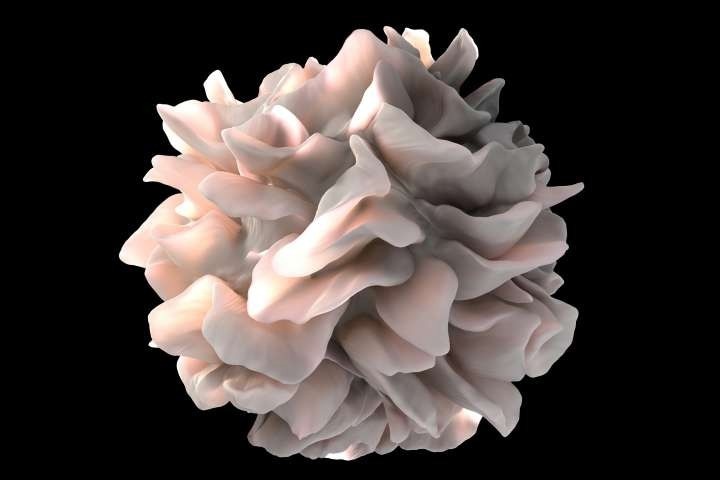 Artistic rendering of a human dendritic cell. Image Credit: Don Bliss & Sriram Subramaniam, National Cancer Institute
The study, which was carried out in human cells and mouse models and published in iScience, directly expands on previous research from the same team demonstrating that creatine enhances killer T cells in their fight against malignancies. The group has now found that creatine also stimulates dendritic cells, which are specialist immune cells that seize tumor fragments and trigger the attack of killer T cells.
Only 20% to 40% of patients respond to the majority of approved cancer immunotherapies, which target killer T cells directly. It may be possible to increase the number of patients who benefit from immunotherapy by supporting the dendritic cells that train and activate T cells.
“Immunotherapy has shown remarkable promise, but it only works for a subset of patients,” said Lili Yang, the study’s senior author.
What this study shows is that creatine doesn’t just help the T cells fighting cancer – it also energizes the entire infrastructure supports and guides them. That makes creatine a promising supplement to holistically support the immune response that modern immunotherapies depend on.
Lili Yang, University of California, Los Angeles
First, the researchers looked at the metabolic genes that were most active in dendritic cells that had invaded mouse tumors. They discovered that, in comparison to dendritic cells in healthy tissue, the gene encoding the creatine transporter, a protein that draws creatine into cells, was significantly higher in tumor dendritic cells.
The group cultured and examined dendritic cells that had been modified to completely lack the creatine transporter in order to determine why. These cells demonstrated decreased activation, decreased survival, and a diminished capacity to activate T cells to generate an anti-tumor response. When T cells were grown in a lab dish with creatine-deficient dendritic cells, the T cells split less and generated fewer of the signaling molecules required to combat cancer.
Next, the group experimented with the opposing intervention: To investigate if this could improve the function of the dendritic cells, the researchers raised creatine levels rather than lowered them. In animal models of melanoma, daily creatine injections markedly reduced tumor growth and increased the quantity and activity of tumor-infiltrating dendritic cells. Additionally, dendritic cells treated with creatine generated more chemical signals that attract more immune cells to the tumor.
The researchers discovered that creatine supplementation increased intracellular ATP levels in dendritic cells, ATP is the energy currency that cells utilize to fuel almost every function, and maintained the important inflammatory signaling pathways required for activation using metabolomics studies.
Creatine aids dendritic cells in maintaining steady energy levels even while they are in competition with rapidly proliferating tumor cells for nutrition, much like a battery stores and releases extra energy when needed.
The effects of creatine on human dendritic cells were also examined by the researchers. Human monocyte-derived dendritic cells, which are frequently employed in dendritic cell cancer vaccines, were more activated and better able to stimulate human T cells against a cancer-associated target after receiving creatine therapy.
The results imply that adding creatine to dendritic cell vaccines could increase their therapeutic efficacy.
The potential we see here is that creatine could be used in two complementary ways: as a supplement to enhance the immune response of patients already receiving immunotherapy, and as a tool to improve the quality of dendritic cell-based vaccines before they're administered.
James Elsten-Brown, Co-First Author and Graduate Student, University of California, Los Angeles
The results collectively suggest that creatine may be used to boost the immune system's anti-cancer response on several levels, including the cells that recognize the threat and initiate the reaction.
Understanding how to metabolically support dendritic cells is about supporting the entire anti-tumor response, not just the killer T cells at the end of it.
Elliot Kang, Study Co-First Author and Former Undergraduate Student Researcher, University of California, Los Angeles
Although the results are encouraging from a scientific standpoint, the researchers stress that no nutritional or medical recommendations should be made because this study was carried out in cells and mice rather than patients. Even though creatine monohydrate has been a popular supplement for many years and is usually regarded as safe at appropriate dosages, anyone receiving cancer treatment should speak with their doctor before including any supplements in their regimen.
The team's next goal is to work with doctors on prospective clinical trials to see if supplementing with creatine improves results for people undergoing immunotherapy.
The Food and Drug Administration has not certified the experimental techniques outlined in this article as safe and effective for use in humans, nor have they been evaluated in humans.
Source:
Journal reference:
Kang, E., et al. (2026) Creatine uptake promotes dendritic cell activation and enhances antitumor immunity. iScience. DOI: 10.1016/j.isci.2026.115436. https://www.cell.com/iscience/fulltext/S2589-0042(26)00811-4.
 Novel Molecular Pathway Identified to Combat T-Cell Exhaustion in Cancer