Scaffolded DNA and RNA origami is a technology that enables scientists to create tiny, very precise two and three-dimensional objects. These nanostructures may have significant future applications in fields like agritech and healthcare since they can naturally interact with biological systems.
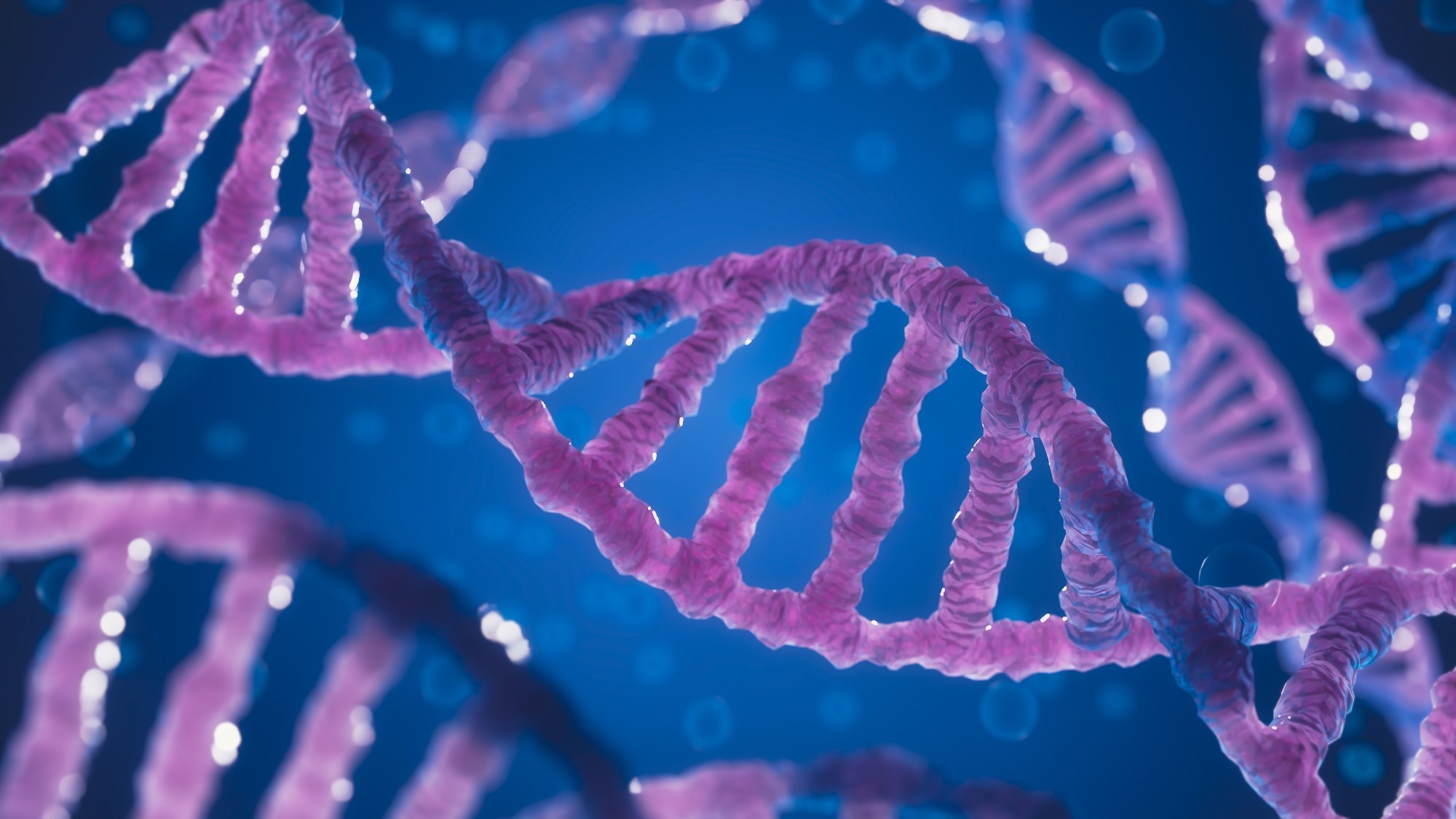 Image credit: Tee11/Shutterstock.com
One long strand of DNA, known as a "scaffold," and numerous shorter strands, known as "staples," are used to create DNA origami. When these are combined, heated, and then cooled slowly, the smaller strands naturally cling to certain sections of the longer strand, giving it structure. DNA extends its well-known double helix form by folding itself into tiny, precisely crafted structures through this self-assembly process.
However, it is not quite clear how the exact arrangement of DNA building blocks determines how well these structures form. Even when the strands are intended to match perfectly, unintended interactions among DNA strands can occasionally cause errors during assembly, reducing the number of successfully produced structures.
A group of researchers under the direction of Newcastle University has created a computer tool that anticipates and steers clear of the undesirable interactions when creating DNA origami. Using this approach, the team identified both favorable and unfavorable scaffold regions from biological and synthetic sequences.
The results, published in the journal Nature Communications, demonstrate that DNA sequence selection plays a crucial role in the successful design of DNA origami and may aid scientists in developing more dependable nanoscale devices for use in biotechnology, materials science, and medicine in the future.
Sequences anticipated to have fewer off-target interactions folded much more successfully, according to experiments with both flat (2D) and three-dimensional (3D) DNA origami structures, while poorly optimized sequences frequently failed even though they had the right overall design. In order to create more dependable DNA nanostructures for next biological and technological uses, the research offers a useful software tool.
Optimizing DNA Origami Assembly
The new paper uses a multi-objective computational framework that optimizes DNA origami assembly by selecting scaffold sequences that minimize off-target interactions, which are known to cause kinetic traps and reduce folding yield. This is crucial for researchers aiming to improve the fabrication yield and mechanical uniformity of custom-designed DNA origami objects for downstream biomedical or agritech applications.
Natalio Krasnogor, Study Lead Author and Professor, Computing Science and Synthetic Biology, Newcastle University
Dr. Juan Elezgaray said: “DNA origamis are used nowadays as an almost routine tool to create nanostructures. We have shown that the success of the method can be seen, partly, as a matter of chance, mostly linked to the choice of a particular scaffold which is easily available. Other choices would have led to a far less efficient method.”
“We provide a novel software able to select optimal DNA sequences for a given target origami nanostructure shape. Looking forward, our in-silico design tool can refine the packaging via origami folding of a specific cargo (e.g. mRNA) and the synthesis of nano-vehicles for exogenous biomolecules delivery to cells,” says Professor Emanuela Torelli.
Future Biomedical, Biotechnological, and Materials Applications
Professor Ariel Kaplan added: “DNA origami is often described as programmable self-assembly, but this work shows that the DNA sequence itself matters more than is usually assumed. By combining computational design, imaging, and single-molecule optical tweezers, we found that avoiding unintended interactions improves not only folding yield, but also the mechanical uniformity of the resulting nanostructures. That reliability is essential for moving DNA origami toward future biomedical, biotechnological, and materials applications.”
We have begun to successfully incorporate the Sequence Selector algorithm in our research to systematically optimize origami staple sets and thereby obtain more robust origami designs. This method complements existing origami design tools that we have used so far and helps reduce misfoldings caused by kinetic traps or non-specific interactions.
Michael Famulok, Professor, Universität Bonn
Source:
Journal reference:
Shirt-Ediss, B., et al. (2026) Optimising DNA origami assembly by reducing off-target interactions. Nature Communications. DOI: 10.1038/s41467-026-73387-4. https://www.nature.com/articles/s41467-026-73387-4.
 Three-Dimensional Genome Architecture Actively Dictates Phenotypic Novelties in Octopuses