New Monash University research has revealed how countries could dramatically strengthen their conservation networks by looking beyond the boundaries of national parks and protected areas – and focusing on how these areas connect.
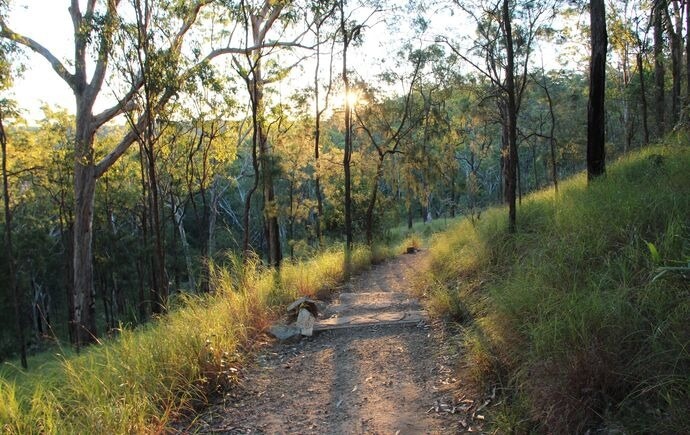 Natural landscapes play a vital role in connecting habitats and supporting overall ecosystem resilience across surrounding regions. Image Credit: Monash University
As the world races towards its commitment to conserve 30 percent of land and sea by 2030, researchers warn that simply adding more protected areas will not be enough to safeguard biodiversity.
Published in Nature Ecology & Evolution, the study analyzed 6,234 conservation sites across 14 countries, revealing significant opportunities to build larger, better connected conservation networks using areas outside traditional protected reserves.
The research examined other effective area-based conservation measures (OECMs): areas outside formally designated protected areas that deliver sustained, positive outcomes for biodiversity.
The researchers found 27 percent of these sites already directly adjoin protected areas, helping to enlarge existing reserves, connect otherwise isolated habitats, buffer protected areas from surrounding pressures, and bring fragmented conservation sites together into larger networks. Meanwhile, 67 percent are located close by, presenting substantial opportunities to strengthen conservation networks.
Monash University conservation scientist and co-author, Associate Professor Carly Cook, from the School of Biological Sciences, said the findings highlighted a fundamental challenge in global conservation planning.
Protecting 30 percent of the planet is an important ambition, but the number alone doesn't tell us whether we're protecting biodiversity effectively, We need to look beyond how much land or sea is conserved and ask whether these areas work together to support species and ecosystems. If we want to create functioning conservation networks then where we protect nature, and how those areas connect, is potentially more important than how much we protect.”
Carly Cook, Associate Professor, Monash University
The researchers found that OECMs directly adjoining protected areas contribute approximately 1.4 million square kilometers to existing conservation networks across the countries studied.
However, just 2 percent of the sites directly connected otherwise isolated protected areas, demonstrating the untapped potential for more strategic conservation planning.
Associate Professor Cook said the findings provided governments with a practical framework for making conservation investments count.
“Our research shows that areas outside national parks and reserves can play a much bigger role in conservation than simply adding hectares to a national target.
“They can help make existing protected areas larger, bridge gaps between isolated sites and create more cohesive conservation networks across landscapes and seascapes.
“But these benefits don't happen automatically. Governments need to think strategically about which areas they recognize and protect, and how those areas contribute to the broader conservation network.”
The study also found that 1,028 previously isolated protected areas or groups of protected areas could be consolidated into 242 larger clusters when OECMs were included.
With less than four years remaining until the 2030 biodiversity deadline, Associate Professor Cook said the research offered an important opportunity to rethink how countries measure conservation progress.
“The risk is that conservation becomes a numbers game, where success is measured by the percentage of the planet we've protected rather than what that protection actually achieves,” Associate Professor Cook said.
“We have an opportunity to be much smarter about conservation, building on existing protected areas, strengthening connections and recognising places that are already delivering important biodiversity benefits. Even if these areas are not formal protected areas.
“If we're serious about halting biodiversity loss, we need conservation networks that function as networks, not simply a growing collection of dots on a map.”
The study provides a framework for assessing how additional conservation areas could strengthen existing networks as governments work towards the 2030 target.
 How Dying Bacteria Protect the Colony From Antibiotics