Box jellyfish are commonly regarded as dangerous animals, with certain species capable of delivering severe or even lethal stings. However, box jellyfish nematocysts, the organelles responsible for the poisonous sting, are thought to perform an unexpected function in reproduction. While several studies investigate the toxicity levels of the approximately 50 species of box jellyfish, their reproductive mechanism are little understood.
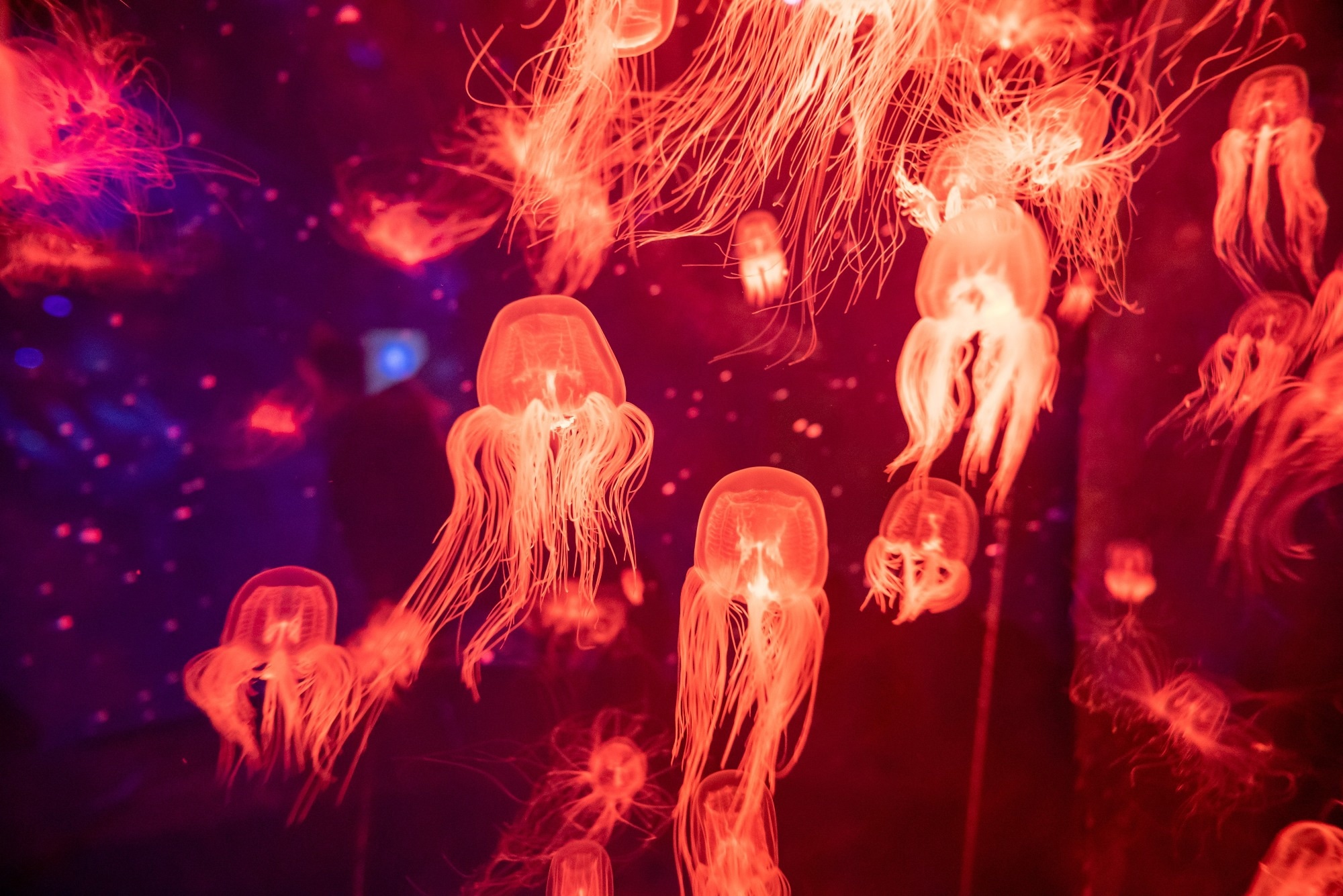 Image credit: Nuttawut Uttamaharad/Shutterstock.com
In this study, a research team evaluated reproductive features of box jellyfish (Cnidaria: Cubozoa) by evaluating preserved samples from diverse species gathered in various parts of the world. They analyzed the development of sperm and eggs using histology, a method that allows researchers to study tissues at the microscopic level. These findings shed fresh light on the reproductive biology of this poorly studied group and help clarify how various species work within their habitats, which is critical for regulating their influence on coastal activities and improving predictions of when and where they will emerge.
This global partnership includes researchers from Tohoku University, the University of São Paulo, the Smithsonian Institution, and European partners, including the University of Alicante. This is one of the most comprehensive studies on box jellyfish reproduction to date. The findings were published in Frontiers in Ecology and Evolution.
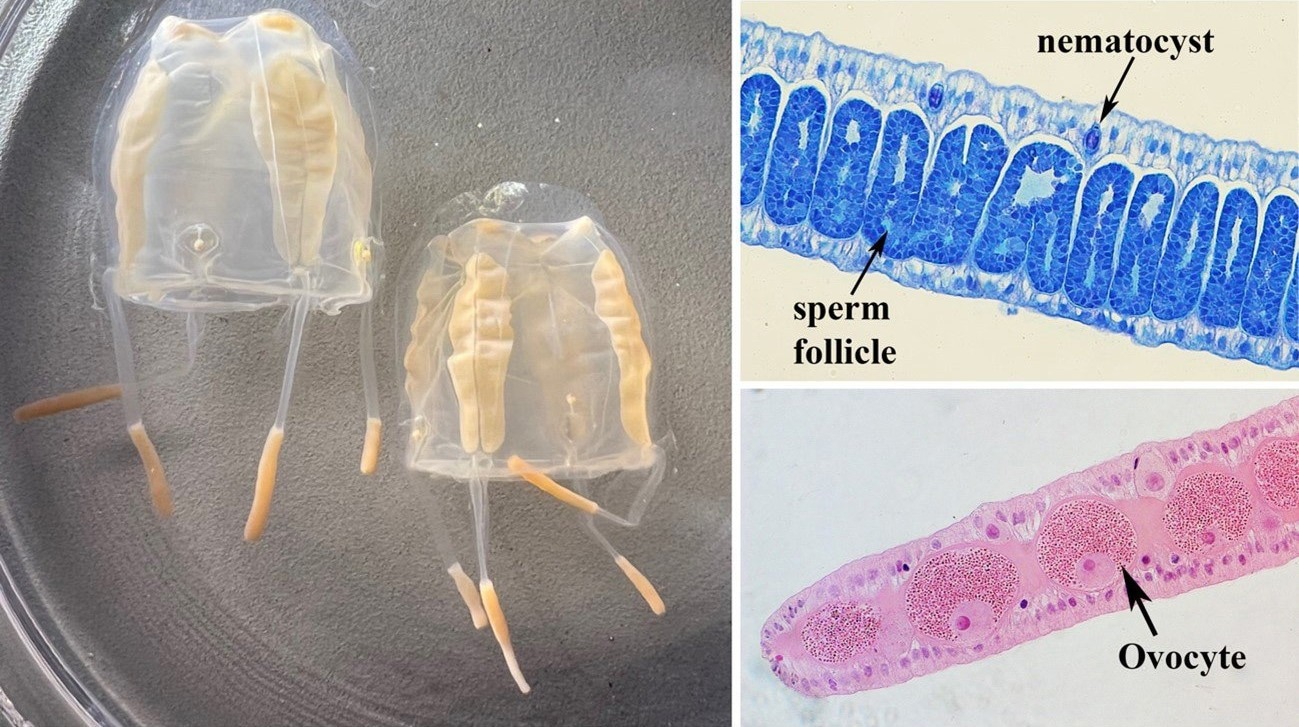 Carybdea marsupialis specimen fixed in formalin (left) from the Smithsonian Institution collection (MSC). The upper panel (blue) shows a male with sperm follicles and two nematocysts, stained with Toluidine Blue. The lower panel shows a female, where oocytes at different developmental stages can be observed, stained with Hematoxylin and Eosin (H&E). Image Credit: Garcia-Rodriguez et al. 2026
It is very difficult to obtain samples of venomous box jellyfish, so we noticed a big knowledge gap about their reproductive cycle and seasonality. Thanks to the help of our international collaborators and access to curated museum collections, we were able to obtain specimens to unravel the mystery behind the complicated reproductive processes of these jellyfish.
Jimena Garcia-Rodriguez, Study First Author and Postdoctoral Researcher, Advanced Institute for Marine Ecosystem Change
Box jellyfish have more complicated and diversified reproductive methods than other Cnidarian classes, according to researchers who studied how sperm and eggs grow and how fertilization happens among species. Understanding their life cycles can eventually aid in the forecast of jellyfish occurrences (such as when they arrive in huge numbers, known as “blooms”), which is important for public safety, tourism, and the coastal industry.
While focusing on learning only about the deadly aspects of these creatures is tempting, studying how they create life is equally important. After all, they play an important ecological role in the environment that is often overlooked because these dangerous traits are more emphasized.
Jimena Garcia-Rodriguez, Study First Author and Postdoctoral Researcher, Advanced Institute for Marine Ecosystem Change
The team plans to do additional research to determine how these reproductive features are related to environmental conditions and climate change. Deep dive analysis like this helps clarify when and where harmful jellyfish blooms are likely to appear.
Source:
Journal reference:
García-Rodríguez, J., et al. (2026) Comparative gonadal histology reveals complex reproductive traits in Cubozoa (Cnidaria: Medusozoa). Frontiers in Ecology and Evolution. DOI: 10.3389/fevo.2026.1825604. https://www.frontiersin.org/journals/ecology-and-evolution/articles/10.3389/fevo.2026.1825604/full.
 Retrotransposon Reactivation Suggests Reverse Transcriptase Inhibitors Lower Cancer Risk